Showing posts with label rodent exclusion. Show all posts

Thursday, August 24, 2017

Murine typhus on rise in Texas

Researchers from the Baylor College of Medicine and Texas Department of State Health Services recently reported an increase in the number of reported cases of typhus in Texas. Texas historically has had more cases of typhus than other states, but this new study published in the CDC's Emerging Infectious Disease journal  shows that numbers of cases have increased ten-fold in the past 14 years.

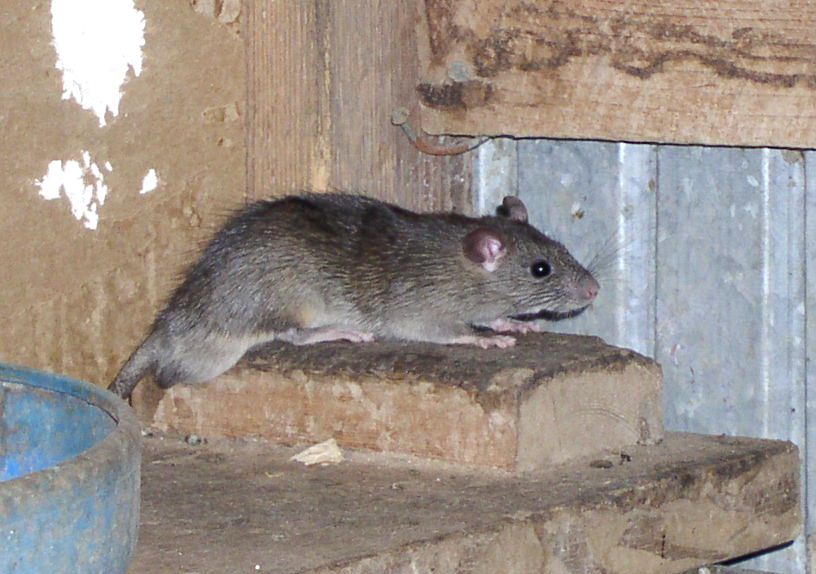
When rodents are present in a house, there may also be rat fleas.
The oriental rat flea is thought to be the principal vector of
murine typhus, a disease on the rise in Texas. (Image courtesy
Pest and Diseases Image Library, Bugwood.org)
In addition to a general increase in cases statewide, the data shows that what used to be solely a south Texas problem is creeping into more northerly parts of the state. Houston, for example, which had no cases of typhus as recently as 2007, reported 32 cases last year.  Nueces County, home to the city of Corpus Christi, had the highest case rate in Texas, reporting about 140 cases/100,000 population.

The causative agent for murine typhus (the term "murine" is a scientific term referring to rodents) is a rickettsial parasite called Rickettsia typhi. This parasite is always present in rodent populations, both Norway and roof rats, and to a lesser extent mice and opossums.  The primary vector that transmits the parasite from rodent to rodent, and occasionally to humans, is the oriental rat flea, Xenopsylla cheopis, though other fleas, including the cat flea are suspected to be occasional vectors.

Symptoms of murine typhus include fever, headache and rash. Left untreated, the disease can be fatal in about 2% of cases; but once diagnosed, typhus is easily treated. Numbers of cases peak during the summer months of June and July, but in south Texas there is a secondary peak in cases during the winter.

The typhus pathogen is thought to infect people when they scratch an itchy flea bite. It is present in the flea's feces, which may be rubbed into the site of the bite during scratching.

While the exact cause for the increase in typhus cases is unknown, pest control will play an important role in any solution. Experience with murine typhus in the past has shown that cases peak when flea numbers are highest, and that case frequency declines when rats are controlled, and insecticides applied for fleas.

In 54% of the cases reported in this study, fleas were reported to be present in the home, and 34% of patients recalled a flea bite.  Rodents were known to be present by the victims in about 29% of the cases, and some form of other wildlife was present in 42% of cases.

Good flea control, rodent exclusion and rodent control are among the most important public health services our industry provides. So if you didn't have enough reasons to explain to customers why they need you, you now have one more.


Friday, July 31, 2015

Inaugural IPM Experience House Class

Tim Madere, Janet Hurley and I (center, front) taught the very first course
to be offered at the IPM Experience House.  The house (background) is
in the process of being remodeled as a pest control training facility.
Yesterday marked a milestone for the development of IPM Experience House. Fourteen pest management professionals attended the very first hands-on class to be held at the facility. The class focused on rodent and pest exclusion.

Principal trainer for this week's class was Tim Madere with the City of New Orleans Mosquito, Rodent and Termite Control Board.

Have you ever met someone who lives and breathes pest control? Who when traveling to a strange town spends their free evenings scouting rodent activity?  Who doesn't complain to the hotel manager about cockroaches in the room because, well, it's another chance to observe cockroaches?  Well, Tim's that kind of guy.

Tim is heavily involved in the New Orleans Rat Project.  The Rat Project is a National Science Foundation-funded, multi-disciplinary project looking at ongoing impacts of Hurricane Katrina on the New Orleans human and rodent community.  Based on the stories and lessons Tim taught this week, there is no shortage of furry subjects to study in The Big Easy and other places in Louisiana. If you don't believe me, check out this video.

Tim Madere discusses rodent-proofing options in the
field. Can you spot the roof rat rub mark in this picture?
(Hint: Follow the wires from the meter to the soffit)
The course was designed to provide 8 hours of verifiable training for pest control apprentices and technicians, but many of the participants this time were pest control veterans.  According to Jackie Thornton and his technician Ryan Reichert, the reason they traveled all the way from Alvin, Texas was to share what they called a "unique opportunity to experience both classroom and hands-on field training" in one class.

In addition to some classroom time, the class went on two field trips.  First stop was the home of Janet Hurley, instructor for the class and lead school IPM educator for Texas.  Janet recently acquired a home with multiple pest control challenges, including roof rats.  Class members diagnosed the problem(s) and provided Janet with both lots of advice and free pest proofing with Xcluder stuffing material.  Later the class visited the IPM Experience House to learn about best ways to solarize household items for bed bugs as well as selecting the best insecticides for outdoor ant control.  If it hadn't been 100 degrees in the sun we might have stayed out even longer.

As I taught and learned from the group I was struck by how hands-on training easily becomes a two way process.  Not only do students learn from instructors, but teachers learn a lot too.  I never fail to pick up valuable information when I get to spend quality time with each of you. The business of pest control is complex, and each of our experiences are unique--so we all have something to teach.  As I listened to students share information and tips with each other I'm reminded that that's what IPM Experience House is all about, and what we want it to be in the future.

Thanks to all of you who attended the pest proofing class, and for being willing guinea pigs for our hands-on efforts.  There will be lots more about future training opportunities in this blog and on the Experience House website.  Let's keep in touch.

Wednesday, July 1, 2015

All hands-on deck training

Entomology faculty at the Texas A&M AgriLife Research and Extension Center at Dallas will be conducting hands-on rodent and pest exclusion training July 30.  If you or your technicians need an introduction to residential exclusion work, this workshop is for you.

The day-long training will begin at 8 am in Building C at the Center at 17360 Coit Road, Dallas, TX 75252.  It will include both classroom and field visits to two sites to discuss pest exclusion. 

“This is the first time the center will be hosting such a program that includes demonstrations of residential exclusion practices,” said Janet Hurley, Texas A&M AgriLife Extension Service urban IPM specialist. “Hands-on instruction will include showing how to seal a house to keep pests from moving in.”

Presentations and instruction will be provided by AgriLife Extension experts from the Dallas center and from guest trainer Timmy Madere, of the City of New Orleans Mosquito, Rodent and Termite Control Board. See a copy of the program by clicking here.  According to Hurley, "Timmy has trained with the best, and has a unique understanding of rodents.  He has worked on exclusion related activities for ten years with the City of New Orleans." 

Six continuing education credits will be offered for commercial applicators. For apprentices and technicians, a course certificate for six hours of attendance will be provided.

After a quick review of IPM principles behind exclusion work, the morning agenda will include a field trip to residence for instruction on best ways to seal a home, including how to pest proof siding, gutters, soffits and flashing.  

Afternoon presentations will address how to evict and keep out rats, bats, birds and squirrels, and a brief overview of home inspections for termites and ants.  The afternoon will include a walking tour of the IPM Experience House training facility.  

The cost of the program is $75, lunch not included. Space is limited, so attendees are encouraged to register as soon as possible.  To register and for payment information, go to Texas A&M AgriLife Extension Conference Services at https://agriliferegister.tamu.edu/index.cfm/productDetails/productid/1799/ or call 979-845-2604.