Showing posts with label termites. Show all posts

Monday, November 20, 2017

Entomologists Ignite in Denver: Part II.

In the first of my two posts about the annual conference of the Entomological Society of America (ESA), I covered some of the non-urban entomology sessions.  In today's post, I'll review some things that are a little more relevant to the business of pest control.


Technology and urban pests

While sitting through some papers at ESA that went way over my head, it occurred to me that entomology has changed a lot since I went to school. One of the biggest changes is in technology. Today's technology is much more sophisticated, and enables us to study insects in ways we could only dream of a few years ago. For example, our ability to amplify minute amounts of DNA from an insect's stomach lets us know what kind of bacteria live there, or what the insect's last meal was. Amazing.
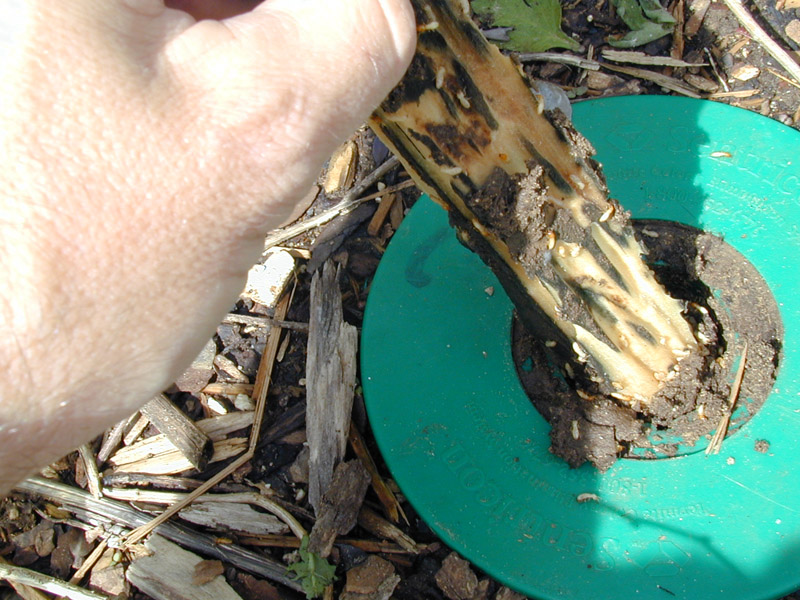
Wooden stake with Formosan termites. Unlike drywood termites,
which get their nitrogen from the air, subterranean termites
appear to get their nitrogen from ingesting soil. 
In one sense, this growing sophistication is a good thing.  It means that researchers now have better tools to understand the basic biology of insects.  On the other hand, there appears to be a trend in many universities to shy away from practical applied research and focus more on shiny new techniques and tools. In hallway conversations with industry reps, I'm told it's easy for hiring companies to find a young entomologist who knows her way around a genetics lab, but increasingly hard to find one who knows their way around a cockroach-infested apartment or a PMP's tool box.

One of my favorite student papers, with a balance of good basic science and applied biology, was also one of the shortest.  Aaron Mullins, University of Florida, explained in his three minute (!) paper that biologists have long known that drywood termites get much of the nitrogen (N) they need from the air (N is an essential element for protein building and reproduction). This makes sense because drywood termites live entirely in relatively low N-containing wood. Mullins wondered if the same was true for subterranean termites. He found that Formosan termites housed in organic (N) rich soil grew their colonies 10X as fast as similar colonies living in clean sand. He concluded from this and other evidence that subterranean termites get their N from the soil rather than air.  I'm not sure of the long-term impacts of this new discovery, but it will likely affect how we rear termites in the lab for experiments.

Jose Pietri with Apex Bait Technologies gave an interesting paper with potentially big implications. Testing the hypothesis that symbiotic gut microbes might play a role in cockroach resistance to insecticides, Pietri and colleague Dangshang Liang fed insecticide-resistant cockroaches a bait mixed with an antibiotic, doxycycline. They found a significant  increase in mortality from the bait with doxycycline compared to bait without the antibiotic. When the antibiotic bait was fed to insecticide-susceptible strains, however, it was no more effective than the bait without antibiotic. If confirmed, this might prolong the usefulness of some insecticide active ingredients for resistant cockroaches.

Ed Vargo, of Texas A&M University, reported that tawny crazy ant, Nylanderia fulva, infested five new Texas counties in 2017, bringing the current total to 39. He found that ants from different crazy ant colonies were not aggressive to one another, and he used sophisticated genetic tools to discover that there were no significant genetic differences among nests in a site or between states. These data suggest that TCA has extended colonies that might range over many miles.  This diffuse nest structure, similar to Argentine ant, at least partly explains why TCA is so difficult to control.

Bed bugs

Are even entomologists getting weary of bed bugs? Maybe. Bed bugs were the subject of 31 papers and posters this year, down from last year's 46 (and a record 56 papers in 2011).  Most of this year's talks were given during a symposium called Advances in the Biology and Management of Modern Bed Bugs. The session featured authors of a new book of the same name to come out in 2018.  If you dig scholarly work on bed bugs, this might be a nice addition to your library--if you can afford it (listed at $200, not unusual for academic books). According to the publisher, it will be the first comprehensive academic review of bed bugs since 1966. NPMA attendees will recognize the names of many U.S. authors like Rick Cooper, Changlu Wang, Dini Miller, and Jim Fredericks.  And there will be a number of international authors as well.

I'm saving up for my copy, but the title got me wondering, "What's a modern bed bug?" So I asked Dini Miller, of Virginia Tech and one of the editors of the book.  She replied that "these are not your grandmother's bed bugs." These are the "incredibly resistant" bed bugs that have made their comeback over the past 20 years. Modern bed bugs have thicker cuticles to resist insecticide penetration, tougher nerves, and better enzymes to detoxify these insecticides. Given that the tropical and the common species of bed bug both have developed these characters, the book theorizes that malaria control programs in Africa, where both species live together and are regularly exposed to DDT and pyrethroids, may have been the breeding ground for these new "super bugs."  Anyway, there is obviously a need for an updated book on on bed bugs.

Research Highlights

Today's bed bugs are more difficult to kill with insecticides. All
the more reason to use a variety of control tactics.
The Highlights of Urban Entomology session is one of my favorites for catching up on papers I may not have had time to read this year. This year's presenter was Chow-Yang Lee, Professor at the Universiti Sains Malaysia, and soon to be with the University of California at Riverside. He and colleagues recently reviewed the literature and found that resistance to chlorfenapyr (Phantom) is "brewing" among modern bed bug populations. Also, bed bugs tested recently from Cincinnati and Michigan show moderate to high resistance to neonicotinoids used in products like Temprid and Transport, Mikron and Tandem. If you had hope that baits might be the answer, a study by Yvonne Matos and coauthors found that secondary kill of bed bugs is much lower than for cockroaches. Even if a suitable way to bait for bed bugs was found, current evidence suggests that baits would likely not be as effective as cockroach baits.

Finding better formulations is a productive field for improving pest control. Vander Meer and Milne reported improved control of fire ants with a waterproof formulation of Distance fire ant bait. Made from dried distillers' grain with solubles and shrimp shells, it outperformed standard corn grit baits. This formulation will likely be more effective as a control for red imported fire ant and little fire ants, especially in wetter locales.

Literature reviews are papers that synthesize lots of scattered research into something that makes sense of the topic. A good literature review is invaluable, especially if you're not an expert. So, I was glad to learn of a new (and free via this link) literature review on fleas, recently completed by the venerable urban entomologist, Mike Rust. Rust looked at some of the more recent advancements in flea borne diseases, new control products, and resistance to insecticides. Contrary to what you might hear from pet owners, there is little evidence that fleas have developed resistance to the very powerful on-animal treatments like fipronil, imidacloprid or lufenuron. On the other hand, pyrethroid resistance by fleas is becoming more widespread. While on-animal treatments solve most problems, pyrethroid resistance poses a dilemma for PMPs needing to treat flea infestations that arise from non-pets, such as feral animals (in a crawl space, say, or in backyards). Not many non-pyrethroid broadcast spray alternatives are available for this task.

Certification

Lastly, I had the opportunity to attend a committee meeting on the ACE (Associate Certified Entomologist) program. This is a program for anyone in pest control who wishes to identify themselves as a certified entomologist. Since last year, Willet Hossfeld has taken over administrative duties for the Certification program.  He reported that there are currently 1025 active ACEs nationwide, with 267 in the application process. If you ever have a question about the certification application, he's the one to contact.

The main topic of discussion by the support committee this year concerned the difficulty of the certification exam (40% pass rate on first try), and how that has discouraged many highly qualified folks from taking it. Several at the meeting noted how useful the study guide that I and Richard Levine co-authored a few years ago, has been.  But there still seems to be a need for group prep classes to better prepare ACE candidates for the exam.  The committee took steps to begin updating the practice exam for those preparing for the test, and discussed how to make more prep classes available.  A prep class PowerPoint set has long been available to anyone who wants to conduct a prep class. This PowerPoint set will be revised and updated in 2018.  Any BCE or ACE who wants to sponsor a prep class, should contact Willet at ESA and he can tell you how it's done and how to get a copy of the prep materials.

You're Invited

Pest management professionals also attend these national meetings. If you haven't yet attended, I encourage you to give it a try (the next two meetings are in Vancouver BC in 2018, and St. Louis MO in 2019). The meeting is a great time to make new friends and professional contacts; and while it's not all pest management oriented, there are always good urban entomology sessions featuring cutting edge research. If you decide to attend, don't be shy--introduce yourself to speakers and others in hallways. Consider attending the Certification Board meetings; visitors are welcome. And bring a few extra bucks for a t-shirt or pet tarantula. Your coworkers will look at you strangely, and you'll know what it's like to call yourself an entomologist.

Monday, March 8, 2010

Predicting termite swarms

termite swarmers emerging from an urban lawnOne thing PMPs will tell you they would love to have is the ability to predict the timing and severity of termite swarms in a given year.  Think about it.  If you knew exactly when termites would swarm, and how big a termite year it would be, your company could know when and how many employees to hire.  Pesticide distributors would know how much termiticide to order, and manufacturers would know what demand was going to be in a given year.  Lots of people would be lots happier.

Actually there is a research tool in IPM circles that attempts to do part of this.  Called a degree-day model, the technique is used to predict insect emergence.  It is based on the fact that insects are cold-blooded, and that development times of insects are linked closely with environmental (ambient) temperatures.  To use the method the relevant environmental  temperature is monitored and degrees for each day are added over time.  The adding is usually started in the dead of winter (January 1 or December 21, the first day of winter, are typical start dates), and a base temperature is selected over which degrees can be counted.  This base temperature varies for each insect, but it is generally the temperature above which development of the insect can proceed. An example of an insect pest whose development can be predicted with some accuracy is the pecan nut casebearer.

Unfortunately, termite swarming behavior is more difficult to predict with degree-day models.  For one thing termites remain active year-round.  Living underground and perhaps partially in heated structures, the ambient temperature of a termite colony would be difficult to monitor.  Most degree-day models are used to predict emergence from overwintering life stages, but PMPs need to know about swarming behavior, a behavior that is likely triggered by environmental conditions other than temperature alone.

A recent question I received about degree day models and urban IPM prompted me to look up a 2002 paper published by Barry Furman, a graduate of the urban entomology program at Texas A&M.  Despite the challenges of using degree days to predict termite swarm occurrence, Furman theorized that degree days might be useful to set the general time for swarmer (alate) termite maturity, and then base termite prediction on environmental triggers, specifically rainfall events, that occur after termites are ready to emerge.  Biologically this is a reasonable guess, because many people have noted that termite swarmers often cluster at the ends of swarmer tubes for several days before emerging, apparently waiting for the right conditions.  To estimate the dates of swarming over recent years, he worked with Orkin Pest Control branches in nine Texas cities to collect information about calls received concerning termites.

The data on swarming dates is fascinating by itself.  For the years 1994-1999, average initial swarm dates going from south to north in Texas were 24 February in Corpus Christi, 28 February in Houston, 28 March in Dallas, and 6 May in Amarillo.  The data do suggest the importance of heat unit accumulation for termite swarming.  Amarillo, the coolest location, experienced termite swarms more than 70 days later, on average, than Corpus Christi, the warmest location.  There was also a correlation between first dates of swarming and rainfall events.  Over 90% of initial swarming dates occurred within three days of a rainfall event.


Most of the swarm events over all the cities Furman studied occurred after heat unit accumulations between 640 and 680 day-degrees (°C), with no swarming noted before a heat unit threshold of 602 degree days. The authors concluded that tracking heat units through the year appeared to have merit in predicting the annual termite swarm.

So, how can this information be used?  This year appears to be cooler than normal, so the calculation might be an interesting exercise for Texas locations. I imported maximum and minimum temperature data from the weather station at the Dallas Center for December 21 to date, converted temperatures to Centigrade, and calculated degree days based on the formula for each day: DD=((max temp+min temp/2)-4), where 4°C is the base temperature Furman estimated, under which no maturation will occur.  If the average temperature for the day is less than 4°C, the accumulated DD for that day is zero (not a negative number, as the formula produces).  According to this calculation (the simplest of DD calculations) Dallas has accumulated only 272 degree days as of March 7.  If Furman and Gold's analysis is correct, we will need approximately 330 more accumulated degree days before swarming can occur in 2010.  With an average daily temperature in Dallas in March of 59°F (15°C), we would expect to accumulate approximately 11°C per day.  A tenuous calculation at best, but if the model is correct, we would not expect swarming any earlier than April 8 this year.  The prediction, of course, depends on temperatures for the rest of this month, but does suggest that swarms in Dallas might come a little later than normal this year.

The exercise demonstrates that so much research that is valuable to the pest control industry can sit on dusty shelves unless someone digs it up and makes it available for use.  This is Extension's job.  In the case of Furman's research on termite swarming predictions, we in Extension may have dropped the ball to some extent, not publicizing it as much as it deserves.  But also helps when researchers work closely with Extension scientists to ensure that research results are extended to the industry and refined so as to become practical.  In the case of termite prediction models, Furman and Gold's work undoubtedly needs more testing before it can confidently predict termite swarming dates.  As for predicting whether this will be a big swarming year, if I knew the answer to that I could make a lot of people happy.

Friday, April 10, 2009

What is Swarming Season?

An alate, or winged termite swarmer, emerges from its nest in the ground before beginning its nuptial flight.Termite swarming season has been going on in Texas for a few weeks now. In north Texas some early swarms have been reported, but PMPs are still holding their collective breaths waiting for the big day of swarms that can mean the difference between a red or black bottom line for the year.

Earlier this week while inspecting some dead trees outside Rockwall, I came across a mass of termite swarmers huddled under loose bark, like nervous football players waiting to run onto the field. Cooler weather over the past few days is likely a big reason that more termite swarming can be expected yet in our area.

So why do termites swarm? Why not mate with other termites from the same nest? Surely this would be safer and easier for all concerned. And why do termites swarm at the same time, overloading phone lines of pest control companies on a few days of the year instead of spacing out the excitement in a more gentlemanly manner? Perhaps not surprizingly, the answers to these two questions are related.

Swarming season, as most PMPs can tell you, is when reproductive termites leave the nest in search of mates in the spring. Swarming is a common means for termites and other social insects, like ants, to ensure genetic diversity and maintain healthy natural populations. Charles Darwin was the first scientist to show the value of out-breeding on biological populations. Darwin showed that plants that were cross-pollinated with other plants of the same species produced more seed and more vigorous offspring than plants that were self-pollinated. Animals and plants that are inbred, such as would occur when termite swarmers breed with their own siblings (all termites in the same colony being related), are more prone to genetic defects and diseases.

The same principle applies to termites, and possibly to our own inherent social aversion to incest and extreme familial inbreeding. Swarming is good for the termite breed because it increases the chance that termite kings and queens will mate with others from outside the family. This brings us to the issue of areawide, synchronous swarming.

When termites from different colonies swarm on the same day, or over a few days at the same time of year, they increase their chances of encountering more distantly-related termites from an outside colony. Although the exact clues termites use to synchronize their swarms is not fully understood, temperature and humidity clues certainly play a role. We still cannot predict termite swarming dates with any accuracy, but the possibility exists that someone will eventually figure out the exact clues and develop an accurate prediction model. Until then, sit back wait. And while you're waiting, marvel a little a the termite's remarkable adaptive abilities.

Tuesday, March 3, 2009

Horizontal transfer of fipronil among termites

Sometimes a scientific fact is known within the research community long before it comes out in print. This is the case with a paper published in the latest issue of the Journal of Economic Entomology.

In a paper by Bagnères et al (J. Econ. Entomol. 102(1): 347-356) the ability of fipronil to be picked up by foraging termites, both by simple contact with treated sand, and by ingestion of treated filter paper. According to one of the authors, Bob Davis of BASF Corporation, this study represented the first scientific evidence that fipronil is transferred horizontally among termite colony members.

The horizontal transfer phenomenom has been suspected for several years since it was observed that termite activity in monitoring stations consistently ceased when stations were close to fipronil-treated soil. While this doesn't mean that transfer of fipronil results in death of colonies, it does offer a possible explanation of the good track record for perimeter-only treatments for termite infested homes.

To see an abstract of the paper you can go to http://www.ingentaconnect.com/content/esa/jee/2009/00000102/00000001/art00046

Friday, October 10, 2008

Wanted: Buildings that build pests out

Anyone who's worked long enough in pest control has come up with bright ideas about how to do pest control better. It's called building a better mousetrap.

My current mousetrap idea is that we need to figure out how to get some of our brightest architects, engineers and code enforcement professionals to sit down together and come up with better ways to build a truly pest-proof building. Furthermore, if we were really smart, we'd market the ideas as part of the current green building movement.

And why not? Once you have a building that is either (1) very difficult for pests to get in, or (2) extremely uncomfortable for the pests that do get in, you should find yourself needing far fewer pesticides (cleaner air) and the cost of building maintenance should go down. Both clean air and reduced building maintenance costs are important to the goals of green design.

So why don't we do this? It's not because of a lack of ideas or know-how.

To pick just one pest challenge, we know a lot about ways to termite-proof a building. A quick Google search reveals, for example, that NCSU entomologist, Mike Waldvogel has a nice online guide to termite proofing a home. Building code experts have struggled with termite-proofing issues for years. The Florida Department of Agriculture and Consumer Services’ Bureau of Entomology and Pest Control has a publication about Florida's code requirements for new An example of termite-proofing, once the concrete is poured around them, these collars will prevent termites from entering the building through the foam insulating sleeves surrounding copper and PVC plumbing pipesconstruction to prevent termite damage. The National Institute of Building Sciences has an interesting website on a concept they call whole building design. This group secured government funding to develop a web portal on the concept, including information on termite proofing.

The concept should apply as well to all sorts of pests including rodents, cockroaches, a variety of crawling insects, birds, bats and other wildlife.

So why don't we do the things we know work well to save the consumer or business money, and reduce our need for pesticides? I think there are many reasons that pest proofing has not gained greater acceptance in the field of building design. For one, building a pest proof building is not as sexy or high profile as an avant-garde design, or a building with high energy efficiency or even one built using recycled materials.

Another important reason is that there is currently no good venues for pest management specialists and architects and engineers to sit down and talk with each another. Entomologists and pest management specialists traditionally have their meetings, and architects and engineers have their separate meetings. Rarely do paths cross.

Last February our office held a meeting with folks from around the country to discuss some of these issues. About 40 experts in pest management, architecture and engineering participated in a three-day seminar to share ideas on designing pest-proof public and commercial buildings. We discussed how integrated pest management concepts could be blended with green-building designs. Lots of good ideas were shared, but, unfortunately, comparatively few architects and engineers were able to participate.

We hope to try again next year at the 6th International Symposium on IPM, to be held in Portland, OR. If you know of anyone with a special interest in this area, you can tell me about it through the comment button on this post. I am especially interested in connecting with people who have expertise in building engineering, architecture and building codes. It can be a long process to build a better mousetrap, but it's one that's worth pursuing.

Thursday, September 4, 2008

Nematodes for pest control?

A question came up today among an online extension fire ant community concerning the use of nematodes to control fire ants. Occasionally I hear from homeowners asking whether nematodes will work as a viable alternative to pesticides for flea, fire ant or white grub control in yards. I thought a little bit of background into nematodes (nemas, for short) might be of interest.

Nematodes make up their own phylum of organisms, the Nematoda, with over 80,000 species, according to Wikipedia. Though many species are plant feeders, a number of kinds are entomophagic, or insect eating and have potential for helping us control pests.

Unfortunately, putting a potentially beneficial organism to work for us is rarely as simple as we would hope. For this reason, if nematode control is ever to be widely used, it will have to be professionals that make it work.

Take grub control for instance. Control of white grubs in turfgrass is an area where nematodes can be successful. To learn more, Dr. Parwender Grewal, of Ohio State University provides useful recommendations for selecting an using nematodes against white grubs and other turf-infesting insects. Because nemas are living organisms, however, control procedures can be complicated. For this reason, I don't think we'll be seeing many do-it-yourselfers embracing use of nemas for yard insect control.

Professionals are much better equipped to provide this kind of service because of its very complexity. Pest management companies have access to microscopes to check viability of the nematodes prior to application. Also, professionals are able to develop the necessary skills and experience, and can establish and follow protocols that are necessary to get consistent control.

Fungus gnats are another pest that can be successfully control with nematodes. In a study by Harris, Oetting and Gardner in 1995, the nematode species Steinernema feltiae was just as effective as the insecticide diazinon in controlling fungus gnats. This approach is especially valuable in interior plantscapes where chemical use is undesirable and plants cannot be easily moved. Similar to using an insecticide, soil media is drenched with nema-containing solutions to prevent fungus gnat reproduction.

Unfortunately, fire ants have never been easily controlled with nematodes, due to their habits of grooming and ability to detect and evacuate sites where nematode populations are high. Dr. Robert Dunn at the University of Florida has developed a short fact sheet on this subject. According to Dr. Sanford Porter at the University of Florida, other more promising species of nematodes for fire ant control are being investigated. But right now the fire ants seem to be winning the nematode war.

What about other pests? Termites, like fire ants, are not easily controlled with biological control agents like nemas because of the difficulty in delivering predators and parasites to underground termite colonies. Also, flea control with nematodes is also not very promising at present. This approach has never been convincingly demonstrated in the field, as Dr. Dunn discusses in another fact sheet on flea control.

Wednesday, May 14, 2008

New termite monitors can lead to hard sell

A recent trend has pest control providers installing termite monitoring stations around residential accounts. These stations are often offered to pest control customers as a free add-on to accompany a standard pest control contract. But there are ethical issues surrounding their use, which I think need some healthy debate.

In case you're not familiar with them, here's how termite monitor stations work. A set of small stations with a termite-attracting, cellulose bait is inserted in the ground around a structure. The stations are designed to be easily monitored by a technician during a regular service visit. Some of these devices have ingenious methods of signalling a termite "hit", similar to the pop-up devices on turkeys used to tell you when they are cooked. Some even allow the homeowner to check their own stations.

The proliferation of these devices begs the question, "What does it really mean to have termites near one's home?" In most cases the answer is, "not much."

Termites, especially in the southern and southeastern states, are commonly found in most yards around homes. Their presence around a house foundation is not usually a cause for alarm. Indeed, they are quite normal.

The ethical issue surrounding these devices concerns what a pest control company does with the information. If the customer is approached with a statement like, "We've found termites in one of our stations, but it's no cause for alarm. I think it would be a good idea to schedule a termite inspection soon, since you haven't had one for awhile. And oh, by the way, I notice that your mulch has been piled a little too high around the foundation, you should lower the mulch and soil line around your foundation to reduce the chance of termites finding their way into your home." This is a responsible use of the information provided by a monitor.

If, on the other hand, your technician or sales person presents the horrified customer with a handful of wriggling termites (collected three feet from their home!) and proceeds to explain that their home is at risk and they should be treated as soon as possible. Well that's not so good. At least one piece of sales literature for a termite monitoring system instructs sales people to tell customers that termite treatment is needed if termites are found in the monitoring station.

To be fair, some customers worry about the smallest termite risk and will want to treat preventatively. This can be a reasonable decision as long as it's understood that the treatment is precautionary and not a necessity. The troublesome issue is human nature. What's to keep some in the industry from putting pressure on a customer to buy a service they don't need? Nothing. The sales literature from one termite station manufacturer offers evidence of that.

It's time to ask ourselves why we really want to use these devices. Is it really customer education? Or is it a marketing gimmick to sell a product that's not really needed? If I'm a consumer, let it be my decision whether I want preventive treatment. If I'm a conscientious pest management business owner, I want a policy in place that tells my sales people exactly how information from termite monitors is to be used.

The last thing the pest management industry needs is negative publicity about how consumers are being duped into buying unecessary services.