Showing posts with label ESA annual conference. Show all posts

Wednesday, November 27, 2019

Society meeting highlights risks of ignoring science

We ignore science, including the study of insects, at our own peril.  This was an underlying message in session after session of the 2019 Annual Conference of the Entomological Society of America.

This year's ESA conference, just a few minutes' walk from the iconic St. Louis Arch, was my first business visit to the the city where I spent most of my growing up years. Out for a jog on the first day of the meeting I remembered as a kid watching workers fit last shiny aluminum triangle into place at the top of the Arch shortly after my family arrived. I admit I felt a little old when I realized the Arch turned 55 this year.

Glorious flies

As glorious as technology can appear to the human eye, I was quickly reminded that insects are just as cool, and have been around a lot longer than any arch.  The plenary session speaker was Janet McAlister, British author of the book The Secret Life of Flies.  With a generous dash of humor, McAlister breezed through story after story of amazing flies.  One in ten living species on the planet is a fly, she said, with 17 million individual flies for every living human. Flies are also beautiful when you get close enough.

We can thank the fruit fly, Drosophila melanogaster, a pest of kitchens and hospitals around the country, for its contributions to our modern understanding of genetics and the genes associated with diseases like Alzheimer's and Parkinson's.

Flies are important pollinators too. A type of biting midge is also the sole pollinator of Theobroma cacao, our plant source for chocolate. No flies?  No more chocolate.

And as McAlister pointed out, at times even crime fighters depend on flies.  The first murder solved with the assistance of insects was the strange case of  Dr. Buck Ruxton in England in 1935. Ruxton was convicted of murdering his wife and servant after the fly maggots found in his victims' decaying bodies were used to estimate the approximate time of the murder.  And as any fan of television's CSI shows will tell you, flies are used for the same purpose today. For some fantastic images of flies, check out Gil Wizen's photography page (featured in many of McAlister's slides).

The coming Insect Apocalypse?

It's not too often that I see reference made to the Bible in a scientific paper, much less a meeting; but this year's buzz-phrase for many attendees was "insect apocalypse."  One of the better attended symposia was devoted to Insect Decline in the Anthropocene (the Anthropocene is a scientific term for the man-dominated biological/geological era we are in today).  While I missed several talks in this session while darting between papers, the central message was clear.  Something is happening to insect populations around the world, and it's not good.

Among concerns of attendees are declines in many kinds of
wild bees, sometimes referred to as a "Beepocalypse"
Hans deKroon, from Radboud University in the Netherlands reported on the results of a 27 year study of insect densities in 63 German nature preserves.  Using the same sampling method and places for sampling in relatively unchanged parklands between 1989 and 2016, the researchers documented a 76% decline in the total weight of insects (biomass) caught in traps over this time.  The surprising thing was that declines were seen across all sites with all kinds of insects--not just a few.  The authors attribute some of the decline to land fragmentation (sites were often close to agricultural land), but also possibly pesticides and climate change.

David Wagner, University of Connecticut, reported a similar 70% decline in moths of pristine New England forests.  The decline, he said, averages 1-2% per year and is across a large region.  The only explanation is some kind of broad external cause(s). Beyond increasing global temperatures, possible causes for loss of moths and butterflies include nitrification, light pollution, exotic insects, and car strikes.

So what are the consequences of such large declines in insect biomass?  I mean shouldn't we be rejoicing in fewer insects if this means fewer pests?  Absolutely not. In addition to entomologists, all sorts of biologists and nature lovers should be concerned by these numbers. Insects are keystone (ecologically very important) species in many environments.  They help decompose dead organic matter, keep potentially invasive plants under control, and feed fish and birds and many, many other types of wildlife. Indeed, one especially depressing study in the Science journal this year reports a 29% decline in bird numbers in the U.S. since 1970 (click here to see the paper in full). While the reasons for bird decline are complex, losing an important food source is not good for birds or bird lovers.

Tim Showalter, Louisiana State University, cautioned attendees to take care in drawing hasty conclusions, and in careless interpretation of apocalyptic data.  In a cautionary paper, he noted that a 2018 paper on supposed food chain collapse and a 60% decline in insect populations due to climate change in a Puerto Rican rain-forest garnered attention in the press, but was ultimately based on faulty data.  A change in positioning of temperature stations, misinterpretation of different survey databases, and impacts of multiple hurricanes led the authors to erroneous conclusions.  The food chain is NOT collapsing in Luquillo, Puerto Rico, he said. A rebuttal to the paper is now posted on the journal website.

Showalter's paper illustrates the imperfection, yet self-correcting nature of science.  It also illustrates how easy it can be for interpreters of science to cherry-pick data to reinforce a given point of view. We all need to be critical readers of science; however, this doesn't mean we can't trust scientists.  Certainly the majority view of entomologists is that something alarming is happening to many kinds of insects in many locations around the world. We should not ignore this issue or the scientists raising fair warning.

Learning from History

Rocky Mountain locust, Melanoplus
spretus, ca. 1870s, Minnesota. 
As I get older, history gets more interesting.  The ESA is fortunate to have among its membership a significant number of scientists with an interest in the historical roots of entomology. For example, I learned from Jeffrey Lockwood, University of Wyoming, that the first recorded time our government called on science to solve a political problem involved entomology. Between 1874 and 1877 the Rocky Mountain locust caused staggering crop damage in Kansas, Nebraska, Minnesota and Missouri. While inventors and hucksters of the day promoted a variety of solutions for locusts, little was really known about the biology and life cycles of these insects. For example, many farmers believed that locusts were so diabolically destructive because they were led by kings and queens (not true).

In 1876 a new governmental group known as the Entomological Commission was authorized by Congress to study the problem. The team quickly recognized that the key to the locust's destruction lay in identifying its true identity, its breeding grounds and the conditions that led to outbreaks (sounds a lot like an IPM program).  Also a collection of natural enemies was identified. While this information would have ultimately been useful in developing long-term control measures, Rocky Mountain locust swarms were already in decline by 1877--something for which the entomologists were happy to take credit. It turns out that by the 1880s the swarms all but ceased, likely because of the loss of the great buffalo herds which, by reducing food in the permanent breeding range, and pulverizing the soil with their hooves, would trigger the buildup of migratory locust swarms.

Entomologists were pragmatists in the locust wars, arguing against those who ascribed the swarms as evidence of God's judgement due to a general lack of morality and repentance.  Rather than promoting a day of prayer, however, entomologists insisted that farmers would be better served by looking to science to discover the causes and solutions to the plagues.  Today the Rocky Mountain locust is extinct, following the path of all organisms that cannot adapt to a changing environment.

Insects and Health

Like it or not insects are important factors in human health. Insects and indoor health was the theme of one session I attended.  Respected researcher Felicia Rabito, Tulane University, pointed out that asthma remains relatively poorly understood, despite its public health significance. One in 12 children in the U.S. suffer from asthma, a chronic inflammatory disease of the airways. In her studies 73% of homes have elevated levels of one or more environmental triggers of asthma (e.g., smoke, pet dander, particulate air pollution, and pest derived allergens).  Cockroach allergens remain one of the strongest promoters and triggers, and appear to cause four times the hospitalization rate of other allergens. Her research with a relatively small sample size showed that even a single IPM intervention (bait only) could have significant positive health outcomes for kids living in treated homes. Their team plans to redo the study with a larger (300 household) sample size.

A co-researcher with Rabito, and one of the most original and thought-provoking urban entomologists today, Coby Schal, North Carolina State University, gave an interesting talk on reducing cockroach allergens simply through cockroaches baiting.  He argued that the comprehensive IPM approach, such as advocated by the National Institute of Allergy and Infectious Disease, starting with improving sanitation, use of non-chemical tactics, biological control and (perhaps) chemical control may be too slow and expensive in most cockroach infested homes (think public housing).  His data suggests that IPM and health specialists should lead with cockroach baiting because it is the fastest and least expensive way to reduce indoor allergens. It remains alarming to me the number of pest control companies that still rely primarily on sprays to control German cockroaches, when baits have time and again been shown more effective in controlling cockroaches and improving public health.

Bed bugs remain a topic of interest in these meetings, though not to the level of 5-10 years ago.  Jonathan Sheele gave two papers on bed bugs from a doctor's perspective. In the Ohio Emergency Room where he previously worked, he noted that when bed bugs were found on a patient, that room would be out of use for cleaning and pest control an average of 20 hours. This would happen every 2-3 days on average. His hospital spent $30,000 annually on IPM costs associated with infested patients. Patients with bed bugs were more likely to suffer anemia, Staphylococcus infection, and use an inhaler than patients without bed bugs. In a separate paper, Sheele reflected on the potential for a future pill that people could take to kill bed bugs. In lab studies, both spinosad and fluralaner (Bravecta®) provided excellent control of bed bugs; however neither drug is yet approved for use on humans.  Abamectin is another antiparasitic agent that does have human approval, however tests on its effectiveness in humans against bed bugs have not been conducted. Such an innovation could be a big boon, especially for low income families suffering from bed bugs.

Stephane Perron, National Institute of Public Health in Quebec, Canada, looked at bed bugs in public health and reported that bed bug infestations often result in prolonged stress for patients. Some of the mental health impacts of bed bugs include fear, sense of lack of control, physical discomfort, sleep deprivation, financial stress, property loss, stress over preparing a home for treatment, conflicts with neighbors, the stigma associated with bed bugs, fear of insecticides, and exacerbation of prior mental health issues.  On the flip side, a recent study she conducted showed that anxiety and depression could decline when bed bugs were successfully controlled--a real benefit pest management companies can take pride in.

Zach DeVries, University of Kentucky, noted that the bed bug's status as only "a nuisance" is coming to an end. Again, public health professionals, decision makers and politicians need to take cockroaches, bed bugs, mosquitoes and other urban pests seriously.

Odds and Ends

Again I felt a little old during this meeting when I realized how different students are today. Grad students at the meeting are more diverse and more attuned to social media than ever before. As such they represent many of your younger pest control customers.

Striving to keep up, I attended a session on using social media.  I found myself in a group fellow laggards who did not understand some of the basics of the Twitter platform.  While I do use Twitter (@mikemerchant), I realized I still didn't understand some of the basics of the app and Twitter platform.  I learned how to better use hashtags, and that I need to follow more people if I want to expand my personal Twitterverse (I have a difficult-enough time with the regular Universe) #oldfashioned, #luddite, #booklover.  I reflected that if we fail to learn from these young professionals we risk ending up like the Rocky Mountain locust.

Joe DeMark, Corteva AgriScience, gave a paper on a new termiticide caulk formulation in the works. The caulk provides another above-ground option for treating termite tubes.  It could, I envision, replace the somewhat clunky (though effective) AG bait stations.  Caulk has an advantage of being flexible enough to inject into infested trees, or placed directly on an exposed termite foraging tube.  It has the same active ingredient as Sentricon, noviflumuron and is applied with a regular caulk gun.  In studies conducted in New Orleans against Formosan termites, tree infestations were consistently eliminated in about 2.5 months.  Control of termites in homes was accomplished in 30-90 days.  If it should ever become a product, DeMark does not expect it to be commercially available until after 2020.

The Asian longhorn tick is now present in 11 states since its discovery in 2017.  A first human bite was recorded this year, which was significant because of its ability in other countries to carry disease to both livestock and humans.  In a talk by Ryan Smith, Iowa State University, I learned that a 2019 study showed that the tick could pick up Lyme disease from an infected mouse (bad). But the same study showed it could not maintain the disease through molting. This is good news, because it means this tick is unlikely to transmit Lyme disease in the wild.  Nevertheless, there are other diseases of concern and the increasing number of exotic pests being introduced into the U.S. continues to threaten both ecological and human health

Lastly, the ACE Associate Certified Entomologist program hosted by the ESA continues to grow. As of this writing there are 1251 active ACEs.  ESA estimates that there will be 1,272 ACEs by the end of year (lots of new applicants currently), representing 13.5% growth since December last year. The ACE program is unique in that it is the only individual-oriented certification program. It can provide potential customers with assurance that your company has qualified staff, and allows you to attend meetings like the St. Louis conference at discounted rates.

If you think you're interested in becoming an ACE, check out the ESA Certification Corporation website.  And consider attending one of the upcoming Texas prep classes in Dallas or in College Station.  The class is an excellent way to either begin studying, or as a last-minute confidence builder before taking the test.

Each of us has a unique role to play in service to our society. But we only do our jobs well when we commit ourselves to lifelong learning. As is clear from these meetings, knowledge is expanding rapidly.  I hope each of you keep following the science behind the pest control profession (as you already are by reading to the end of this post) and continue to avoid the perils of unfounded opinion.

Science is the father of knowledge, but opinion breeds ignorance. Hippocrates


Monday, November 20, 2017

Entomologists Ignite in Denver: Part II.

In the first of my two posts about the annual conference of the Entomological Society of America (ESA), I covered some of the non-urban entomology sessions.  In today's post, I'll review some things that are a little more relevant to the business of pest control.


Technology and urban pests

While sitting through some papers at ESA that went way over my head, it occurred to me that entomology has changed a lot since I went to school. One of the biggest changes is in technology. Today's technology is much more sophisticated, and enables us to study insects in ways we could only dream of a few years ago. For example, our ability to amplify minute amounts of DNA from an insect's stomach lets us know what kind of bacteria live there, or what the insect's last meal was. Amazing.

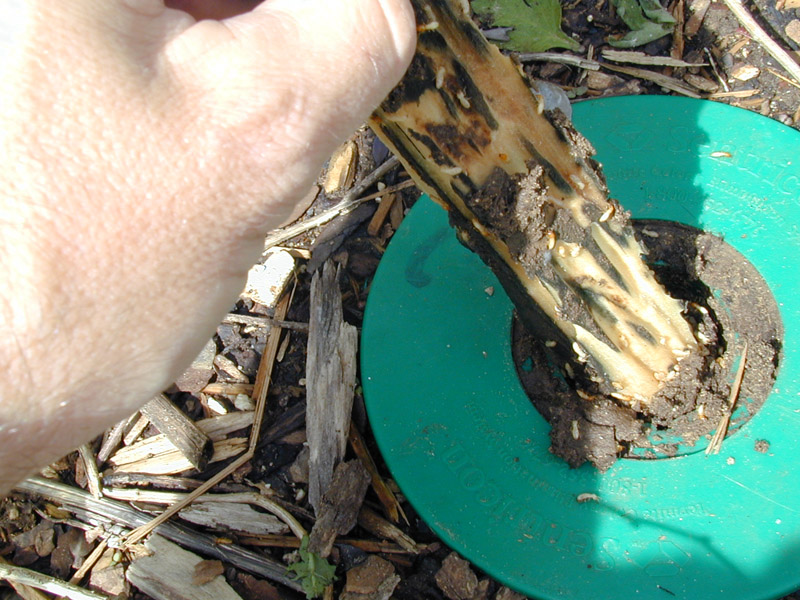
Wooden stake with Formosan termites. Unlike drywood termites,
which get their nitrogen from the air, subterranean termites
appear to get their nitrogen from ingesting soil. 
In one sense, this growing sophistication is a good thing.  It means that researchers now have better tools to understand the basic biology of insects.  On the other hand, there appears to be a trend in many universities to shy away from practical applied research and focus more on shiny new techniques and tools. In hallway conversations with industry reps, I'm told it's easy for hiring companies to find a young entomologist who knows her way around a genetics lab, but increasingly hard to find one who knows their way around a cockroach-infested apartment or a PMP's tool box.

One of my favorite student papers, with a balance of good basic science and applied biology, was also one of the shortest.  Aaron Mullins, University of Florida, explained in his three minute (!) paper that biologists have long known that drywood termites get much of the nitrogen (N) they need from the air (N is an essential element for protein building and reproduction). This makes sense because drywood termites live entirely in relatively low N-containing wood. Mullins wondered if the same was true for subterranean termites. He found that Formosan termites housed in organic (N) rich soil grew their colonies 10X as fast as similar colonies living in clean sand. He concluded from this and other evidence that subterranean termites get their N from the soil rather than air.  I'm not sure of the long-term impacts of this new discovery, but it will likely affect how we rear termites in the lab for experiments.

Jose Pietri with Apex Bait Technologies gave an interesting paper with potentially big implications. Testing the hypothesis that symbiotic gut microbes might play a role in cockroach resistance to insecticides, Pietri and colleague Dangshang Liang fed insecticide-resistant cockroaches a bait mixed with an antibiotic, doxycycline. They found a significant  increase in mortality from the bait with doxycycline compared to bait without the antibiotic. When the antibiotic bait was fed to insecticide-susceptible strains, however, it was no more effective than the bait without antibiotic. If confirmed, this might prolong the usefulness of some insecticide active ingredients for resistant cockroaches.

Ed Vargo, of Texas A&M University, reported that tawny crazy ant, Nylanderia fulva, infested five new Texas counties in 2017, bringing the current total to 39. He found that ants from different crazy ant colonies were not aggressive to one another, and he used sophisticated genetic tools to discover that there were no significant genetic differences among nests in a site or between states. These data suggest that TCA has extended colonies that might range over many miles.  This diffuse nest structure, similar to Argentine ant, at least partly explains why TCA is so difficult to control.

Bed bugs

Are even entomologists getting weary of bed bugs? Maybe. Bed bugs were the subject of 31 papers and posters this year, down from last year's 46 (and a record 56 papers in 2011).  Most of this year's talks were given during a symposium called Advances in the Biology and Management of Modern Bed Bugs. The session featured authors of a new book of the same name to come out in 2018.  If you dig scholarly work on bed bugs, this might be a nice addition to your library--if you can afford it (listed at $200, not unusual for academic books). According to the publisher, it will be the first comprehensive academic review of bed bugs since 1966. NPMA attendees will recognize the names of many U.S. authors like Rick Cooper, Changlu Wang, Dini Miller, and Jim Fredericks.  And there will be a number of international authors as well.

I'm saving up for my copy, but the title got me wondering, "What's a modern bed bug?" So I asked Dini Miller, of Virginia Tech and one of the editors of the book.  She replied that "these are not your grandmother's bed bugs." These are the "incredibly resistant" bed bugs that have made their comeback over the past 20 years. Modern bed bugs have thicker cuticles to resist insecticide penetration, tougher nerves, and better enzymes to detoxify these insecticides. Given that the tropical and the common species of bed bug both have developed these characters, the book theorizes that malaria control programs in Africa, where both species live together and are regularly exposed to DDT and pyrethroids, may have been the breeding ground for these new "super bugs."  Anyway, there is obviously a need for an updated book on on bed bugs.

Research Highlights

Today's bed bugs are more difficult to kill with insecticides. All
the more reason to use a variety of control tactics.
The Highlights of Urban Entomology session is one of my favorites for catching up on papers I may not have had time to read this year. This year's presenter was Chow-Yang Lee, Professor at the Universiti Sains Malaysia, and soon to be with the University of California at Riverside. He and colleagues recently reviewed the literature and found that resistance to chlorfenapyr (Phantom) is "brewing" among modern bed bug populations. Also, bed bugs tested recently from Cincinnati and Michigan show moderate to high resistance to neonicotinoids used in products like Temprid and Transport, Mikron and Tandem. If you had hope that baits might be the answer, a study by Yvonne Matos and coauthors found that secondary kill of bed bugs is much lower than for cockroaches. Even if a suitable way to bait for bed bugs was found, current evidence suggests that baits would likely not be as effective as cockroach baits.

Finding better formulations is a productive field for improving pest control. Vander Meer and Milne reported improved control of fire ants with a waterproof formulation of Distance fire ant bait. Made from dried distillers' grain with solubles and shrimp shells, it outperformed standard corn grit baits. This formulation will likely be more effective as a control for red imported fire ant and little fire ants, especially in wetter locales.

Literature reviews are papers that synthesize lots of scattered research into something that makes sense of the topic. A good literature review is invaluable, especially if you're not an expert. So, I was glad to learn of a new (and free via this link) literature review on fleas, recently completed by the venerable urban entomologist, Mike Rust. Rust looked at some of the more recent advancements in flea borne diseases, new control products, and resistance to insecticides. Contrary to what you might hear from pet owners, there is little evidence that fleas have developed resistance to the very powerful on-animal treatments like fipronil, imidacloprid or lufenuron. On the other hand, pyrethroid resistance by fleas is becoming more widespread. While on-animal treatments solve most problems, pyrethroid resistance poses a dilemma for PMPs needing to treat flea infestations that arise from non-pets, such as feral animals (in a crawl space, say, or in backyards). Not many non-pyrethroid broadcast spray alternatives are available for this task.

Certification

Lastly, I had the opportunity to attend a committee meeting on the ACE (Associate Certified Entomologist) program. This is a program for anyone in pest control who wishes to identify themselves as a certified entomologist. Since last year, Willet Hossfeld has taken over administrative duties for the Certification program.  He reported that there are currently 1025 active ACEs nationwide, with 267 in the application process. If you ever have a question about the certification application, he's the one to contact.

The main topic of discussion by the support committee this year concerned the difficulty of the certification exam (40% pass rate on first try), and how that has discouraged many highly qualified folks from taking it. Several at the meeting noted how useful the study guide that I and Richard Levine co-authored a few years ago, has been.  But there still seems to be a need for group prep classes to better prepare ACE candidates for the exam.  The committee took steps to begin updating the practice exam for those preparing for the test, and discussed how to make more prep classes available.  A prep class PowerPoint set has long been available to anyone who wants to conduct a prep class. This PowerPoint set will be revised and updated in 2018.  Any BCE or ACE who wants to sponsor a prep class, should contact Willet at ESA and he can tell you how it's done and how to get a copy of the prep materials.

You're Invited

Pest management professionals also attend these national meetings. If you haven't yet attended, I encourage you to give it a try (the next two meetings are in Vancouver BC in 2018, and St. Louis MO in 2019). The meeting is a great time to make new friends and professional contacts; and while it's not all pest management oriented, there are always good urban entomology sessions featuring cutting edge research. If you decide to attend, don't be shy--introduce yourself to speakers and others in hallways. Consider attending the Certification Board meetings; visitors are welcome. And bring a few extra bucks for a t-shirt or pet tarantula. Your coworkers will look at you strangely, and you'll know what it's like to call yourself an entomologist.

Entomologists Ignite in Denver: Part I.

One of the hottest exhibits at ESA was the BioQuip booth.
At what other meeting could you see people lined up to
buy pinned insects or live tarantulas and scorpions?
Ignite. Inspire. Innovate. Three motivational words greeted entomologists swarming to the 2017 annual conference of the Entomological Society of America (ESA) in Denver, Colorado. Between November 5th and 8th, the mile high city welcomed 3,700 insect scientists to present over 1,000 scientific papers and 800 poster displays.

It's hard to describe the typical entomologist you see at these meetings. Some are old, many are young (some very young). Some are geeky, some cool. Some seem more comfortable working in a quiet museum surrounded by dried insects, and some happiest with beer in hand and at the center of a crowd. But all share an unusual enthusiasm for insects. After all, at what other meeting can you find long lines waiting to purchase live scorpions, pet tarantulas, pinned insects, insect t-shirts, and insect jewelry?

There is something for nearly everyone at these meetings. To that end, this year I determined to sample a variety of papers and meetings and speakers. My schedule started off with a Lunch and Learn event entitled "How to talk to a Nine-year-old about climate change (And other tough subjects)." Hosts for this session were employees of the Butterfly Pavilion, an "invertebrate museum" located 15 minutes from downtown Denver.

The Butterfly Pavilion uses an informal education approach, which means "a wise, respectful and spontaneous [learning] process... through conversation, exploration and enlargement of experience." In other words, informal education is learning outside a formal classroom.

Instead of lecturing with graphs and statistics to teach about climate change, Butterfly Pavilion staff show people live corals and follow up with questions: Did you know coral is a living animal? And even though coral reefs make up a tiny portion of the ocean floor they provide food shelter and breeding grounds to more than a quarter of all ocean life?

This approach is fruitful because we humans will only protect the things we love. By creating a connection with, and love for, corals (or insects), kids are open to caring about these organisms. All of a sudden scientific data showing that pollution, climate change, and disease are killing off many corals, becomes important. Using events like "Bugs and Beer" and "Tarantulas and Tequila" the museum also reaches out to adults to raise pollinator awareness and understanding of other environmental issues affecting the invertebrate tree of life.

Hemp

Industrial hemp is an outdoor crop grown for fiber
and the medicinal compound cannabidiol. Suggested
benefits of cannibidiol are controversial, but include
pain relief for multiple sclerosis, reduction of
certain epileptic seizures, and addiction
treatment. Photo by ShareAlike, Wikipedia
Since we were in Colorado, I wanted to check out the "buzz" over the symposium "Industrial Hemp and Entomology." Even with recreational marijuana now legal in Colorado and seven other states, it's still illegal federally. Hence, the EPA will not register pesticides for the purpose of protecting this plant. This is a big problem because lots of insects, I learned, like to eat marijuana (have you heard of the cannabis aphid?).  Given that a single marijuana plant can be valued at $700 or more, and two plants can be worth as much as an acre of corn, it should come as no surprise that growers will use insecticides (legal or illegal) to protect their plants. And without labeled insecticides that have been tasted for safety, purchasers of legal marijuana literally don't know what they're smoking...

In an interesting twist, the 2014 Farm Bill gave authority to state legislatures to decide how to regulate "industrial hemp," a variety of Cannabis sativa, the same plant species as marijuana, but without the buzz.  However, to be classified as industrial hemp the plant must contain less than 0.3% THC (marijuana's psychoactive ingredient).  Industrial hemp has been illegal in the U.S. since 1937; but as a result of the Farm Bill, many states have or are considering making outdoor culture of industrial hemp legal, as it is in Colorado.  The bill also allowed Colorado State University to develop guidelines for research and extension activities for the low THC crop. Hence now we have the first extension website on insect management in hemp. Check it out.

The Environment

Even though entomologists are, by and large, a happy group, we worry. We worry about the environment and the effects of climate change and pollution and invasive species and lots of things. One of the big concerns circulating the paper sessions this year was new data suggesting an international, general decline in the numbers of insects. Now people (perhaps many of your customers) might say, "I don't see a problem here." But think about it. Without insects there would be few birds, no frogs and toads, no trout to fish, and no "lot of things." You get the picture. Insects help hold the world together.

David Wagner, from the University of Connecticut, is a well-respected moth expert. He presented his own data, and data from Britain, Iceland, and Germany that seem to indicate a slow, but alarming decline in many insects over the past 60 years. In one German study, the overall weight of collected flying insects in parks went down 80% since 1989. In Britain, 54% of studied butterflies have declined in the past 10 years. No one really knows what this is doing to the health of the planet, but the consensus is that it's not good.

Other environmental papers focused on pollinator insects, especially bees. Because they pollinate crops and native plants alike, honey bees and the 4,000+ species of native bees in North America provide irreplaceable services to our ecosystem. Yet many species appear to be in decline. Katie Lamke, of the University of Nebraska reported on her work with the USGS to manage a pollinator library, a collection of information about what plants different pollinator bees are found on. This information can be used to help farmers and gardeners know how to select plants to help these important insects.

In tomorrow's post I'll cover some of the ESA sessions that relate more directly to urban pest control.


Tuesday, November 25, 2014

What's news in entomology?

Portland, Oregon, site of this year's ESA
meeting, is a short drive from many natural
wonders, including Punch Bowl Falls in the
Columbia Gorge area.
Some 20 years ago, shortly after being hired as extension entomologist, I figured I would save money by not attending the annual conference of the Entomological Society of America. In retrospect, that decision ranked as one of the poorest choices of my professional life.

The year I skipped ESA was like being lost in space--as if I had missed out on all the advancements in my field for the previous 12 months.  The ESA annual conference is the best way I know to keep in touch with colleagues and learn about new advances in the science of insects.  The meeting covers everything from the most basic scientific theory to very practical topics in pest control. I haven't missed a meeting since that lost year.

This year the meetings were at the Portland Oregon Convention Center, with over 3,400 entomologists and about 3600 papers and posters. Every year after the meeting I like to go over my notes and highlight what I think were some of the most important bits of information.  So, as my gift to you, here are highlights from the very small slice of the conference that I experienced:
  • In Michigan and other Midwest states, an insect called the Emerald ash borer (EAB) has been devastating ash trees since 2002. Researchers are finding, however, that after a decade of expanding its range, some "good" bugs are coming to the rescue.  In the center of its new territory, parasitic wasps, both native and imported, have reduced EAB densities five-fold over their peak in 2005.  With EAB poised to invade Texas, this is especially good news.  Over the past ten years, several effective treatments have been discovered for this beetle.  Emamectin benzoate (TREEage), imidacloprid (Merit), dinotefuran (Safari) provide multiple years of control with one application. There is even an effective organic treatment.  Azadirachtin (TreeAzin 2) has been found to control EAB larvae for one year.
  • Molecular genetics has become a major, if not dominant, subject of presentations at the annual conference.  This year's keynote speaker, Fred Gould of North Carolina State University, spoke of the successes and potential of genetic pest management.  The science started with sterile insect releases that eradicated the screwworm fly and Med flies as early as the 1960s.  More recently genetic engineering has been developed to insert genes into a population of insects that might reduce its ability to be a pest.  For example genes have been discovered that might prevent a mosquito from becoming infected with a virus like West Nile.  Mosquitoes have been targets for this kind of genetic engineering research in the past 20 years, but a major challenge has been how to speed up the spread of desirable genes into the whole population.  Now a new version of this technology promises to solve this problem.  According to Gould, special genes have been designed that not only insert desirable genes into pest insect DNA, but also, like a computer virus, replicate itself within the pest's chromosomes.  Called homing endonuclease genes, this technology promises almost immediate results, unlike the older technology which might take years to take hold.  With this technology it is conceivable, says Gould, to completely eradicate a "bad" insect species. Of course implementation of this technology raises ethical questions, for which scientists will have to answer. If it works, it would be scary powerful.  
  • Have invasive ants finally met their match?  Two 2014 papers highlighted at this year's meeting suggest that fire ants and Argentine ants, two of our worst invasive ant species, have finally been out competed by other ants.  When encountering fire ants, the tawny crazy ant (TCA) covers itself with formic acid which forms a coating that protects from fire ant venom.  Researchers tested the importance of the TCA anal excretions by covering their little ant anuses with nail polish (I'd like to see how they did that).  When anuses were blocked almost half of the ants battling fire ants died.  When not covered, only 2% of the TCA died in battle with fire ants.  Cool.  Similarly the Asian needle ant is out-competing Argentine ants for prime nest sites. They do this by having better cold tolerance than Argentines.  Too bad that both of these new invaders are bad pests on their own.  People living with tawny crazy ants in Texas say they would rather have the fire ants. And Asian needle ants are supposed to have a wicked sting.
  • New insecticide formulations come around less often than new insecticides, but this year Syngenta Professional Products appears to have developed a promising new formulation for ant control. Based on polyacrilamide gel, the formulation consists of water-storing crystals that can hold an insecticide for long periods of time.  Add sugar, or a protein, and you have a product that can be applied dry like a granule, and expand with exposure to water into a highly attractive gel bait.  Imagining being able to bait an entire yard for sugar-loving ants with gel bait in the same amount of time that it takes to put out fire ant bait.  Reported by Purdue entomologist, Grzesiek Buczkowski, this formulation could provide better control of sugar- or protein-loving ants, including Argentine ants, odorous house ants, crazy ants and rover ants, among others.  This product is not yet on the market.
  • Now imagine baiting for bed bugs! Bait technologies have revolutionized cockroach and ant management, but because bed bugs feed only on blood, baits for bed bugs have been seen as impractical. Maybe until now. Research by Alvaro Romero, urban entomologist at New Mexico State University, appears to have solved at least one step in the complex problem of bait development for bed bugs.  Alvaro's group found a synthetic substitute for blood that bed bugs will feed on, and even gain weight with. If an effective method of delivery can be found, this could be a major advance in bed bug management at some time in the future.
  • Ebola virus was the subject of an informal symposium put together at the last minute by Extension entomologist Nancy Hinkle, University of Georgia.  The official line from the Centers for Disease Control is that no insect is a known vector for Ebola virus.  However, after a quick literature review of the potential for insects to serve as Ebola vectors it became clear that the book is not closed on this subject. While some research shows that Ebola transmission from mosquitoes is unlikely, medical entomologists are concerned about the potential for flies to serve as mechanical vectors of the virus.  In Africa, where several species of flies are commonly seen feeding on eyes and wounds of people, the potential for mechanical (carried on the external portions of the body rather than in the saliva or feces) transmission is feasible.  The group also discussed the potential for cockroaches and bed bugs to serve as Ebola vectors.  To date, it appears that no one in Africa, or with the CDC, has specifically investigated these potential vectors. The symposium participants agreed that the issue is important enough to justify writing a letter to the CDC urging funding for research into these pests in the near future.  
  • Speaking of human diseases, one of the more surprising announcements at the meetings this year was research by Brittany Blakely, of New Mexico State University, which showed that bed bugs may be able to transmit Trypanosoma cruzi, the pathogen that causes Chagas disease. If experimentally demonstrated with live animals, this would be the first human disease known to be carried by bed bugs.  But this is still just a theory. What Blakely and her team showed was that when bed bugs were fed on infected blood, the pathogen could be found in their bodies for at least 3 months.  The pathogen also remained with the bugs even through molting. At the same time we were learning these results, Penn State researchers announced last week l that they had successfully infected mice using bed bugs as a vector for T. cruzi. Because bed bugs are primarily human feeders, they would have to first feed on an infected person to become infected. According to the Red Cross, there may be as many as 100,000 people with the parasite in the U.S.  If bed bugs are proved to be capable of transmitting the disease between two humans (which hasn't happened yet), this could be a significant new twist on the bed bug problem.
  • The ACE (Associate Certified Entomologist) program at ESA is expanding this year with the launch of a new International ACE program.  A new test has been developed for PMPs outside the U.S. wishing to become certified.  In addition, the ESA is considering adding an ACE-Public Health certification to its program.  Some of the initial discussions about this option took place last week at the meeting and it appears that the National Mosquito Control Association is interested in the prospect of having ESA develop a test and certification.  
  • Lastly, I can't ignore the buzz about the Twitterverse any longer.  I have to admit that I've been slow to jump on the Twitter bandwagon, but after listening several very good talks last week I think I've been convinced to take the leap. I've been told that if I want to stay in touch with you and other (especially young) pest management professionals, this is something I need to do. Plus, last month at our fall IPM training conference I felt old when our new Extension turfgrass specialist casually put up his Twitter handle at the end of his talk and welcomed people to follow him. Not to be outdone by a young whippersnapper, here's my "handle" @mikemerchant.  I invite you to follow me on Twitter as I try to find my place in this increasingly wired world.


Wednesday, May 29, 2013

A unique opportunity for Texas IPM professionals

In case you haven't already heard, Texas gets to play host to a major event in the world of entomology and pest control this year.  The annual conference of the Entomological Society of America will be held November 10-13 in Austin.  The theme of this year's meeting is Science Impacting a Connected World, and approximately 3,000 entomologists from all over the world are expected to attend.

Many of you might be asking, "What's in it for me?"  In my opinion, plenty. The ESA meeting draws urban entomologists from all over the country to hear the latest in structural pest control research and activities. For a taste of the kind of information that you can hear at ESA, check out my past posts on ESA meeting highlights. In recent years ESA has become very welcoming to the pest control industry, even to the point of sponsoring special sessions for ACEs and other PMPs.

Rates for attending the meeting include early bird and on-site  registrations.  If you register before September 23,  ACEs can register for for $455 (comparable to the member rate of $430). Others pay $635 for early-bird and $765 for late registration. The meeting will be held at the Austin Convention Center.

This year the Texas IPM Affiliates for Public Schools (TIPMAPS) will be holding their annual meeting jointly with ESA. The TIPMAPS group is Texas' professional association for Public School IPM Coordinators.  They and Texas A&M University will be sponsoring a day-long program called Under the Lens, a CEU granting educational program and annual meeting featuring entomologists speaking on various topics including delusions of parasitosis, mosquitoes, pyrethroid label changes and fire ants, bed bugs, and rodent management around schools.  Advanced registration for the day is $100 (includes lunch) and $125 for on site registration. Although the program is designed for school IPM professionals, PMPs should also find the presentations and speakers of great interest. Registrants for the program will get access to the meeting exhibits and limited access to some of the scientific paper sessions. If you are interested in registering, or just want to learn more, click here.

Besides the TIPMAP event, a few of the symposia and paper sessions at the ESA meeting that might be of special interest to PMPs include:
  • Applied Research on Bed Bug Management
  • Arthropod Associated Allergy 
  • Healthy Schools: Research, Benefits and Impacts in the Classroom 
  • The Impact of Repellent Research and Development of New Arthropod Repellents 
  • Chagas Disease in the USA? A New Risk?  
  • Transmitting Mosquito Information: From Laboratory to Surveillance and Management in the Field 
  • How Cool is Entomology? 
  • Red Imported Fire Ants: Global Approaches to a Global Invasive Species 
  • Stored Product Entomology: Impacts on a Connected World 
  • Urban Entomology Presented Papers
  • Medical/Veterinary Presented Papers
  • Informal Conference on Insects of Ornamentals
  • Click here for a full listing of special symposia topics
Though some of the papers are highly technical, most of the urban entomology sessions should be accessible to anyone with a basic knowledge of entomology and an interest to see the latest science behind the craft. I hope many of you will consider attending.