Showing posts with label bed bugs. Show all posts

Friday, March 8, 2019

When a bed bug isn't a bed bug

Entomologists get excited over the strangest things. This morning I got my first bat bug sample ever, and I'm still all aflutter.

The pronotal fringe hairs on these common bed bugs
(see arrow) are short, no longer than the width of
the bed bug's eye. This feature is visible with a
hand-lens even through a plastic zip-loc bag, as in
this photo. Image by Mike Merchant.
Bat bugs and swallow bugs are relatives of the common bed bug, Cimex lectularius--the species you are most likely to encounter on a daily basis in the pest control business. There are approximately 100 species in the bed bug family, referred to as cimicids (sigh MISS ids).  Most are specialists on certain types of birds and bats. Generally, these bird and bat feeders have little interest in human blood, and cannot survive without their normal winged hosts.

Most of these other species of cimicid bugs look much like our common bed bug.  They will be flat, oval-shaped and reddish-brown, with adult forms about the size of an apple seed.

Current thinking among biologists is that cimicids that specialize in birds and people are spin-offs from ancestral, bat-loving bed bugs. The data suggest that the switch-over from bat feeding to human feeding may not have been that long ago in evolutionary time. It's not difficult to imagine our ancient ancestors scratching from the first hungry bat bugs checking out other food choices in dark caves.

Today, it's rare to find our common bed bug feeding on bats, though it seems this species is less choosy about hosts than most other cimicids. Cimex lectularius has been found feeding on chickens, pigeons, swallows and even pets (though its clearly preferred host seems to be humans). 


Distinguishing common bed bugs


Though bed bug identification is definitely a job for specialists, fortunately it's not difficult for any PMP to tell the difference between bat bugs and the common bed bug with a hand lens or office microscope.  It has to do with the haircut. 

Common bed bugs, our main human bed bug pest, have a fringe of short hairs on the edges of the pronotum, that "shield-like" plate behind the head (see first picture).  

The pronotal fringe hairs of bat bugs and most
bird bugs (see arrow) are longer than the eye is
wide. Image of an eastern bat bug, Cimex adjunctus,
by Mike Merchant.
Bat and swallow bug fringe hairs are longer (see lower picture). This shouldn't be hard to remember if you think of bats as being hairier than people.  Though this character won't necessarily help you tell a bat bug from a swallow bug or pigeon bug, it is a reliable way to tell one of these non-people feeders from the common bed bug.

Don't walk away


Just because your customer has bat bugs instead of bed bugs, it doesn't mean your job is done. While treating bedrooms with a conventional bed bug treatment is unnecessary (bat bugs do not aggregate around beds, nor reproduce on people), there is still pest control to be done. Bat and bird bugs are best controlled by eliminating their preferred hosts from the structure and possibly treating the roosting/nesting sites for bed bugs.

Host elimination is not as simple as closing entry points for bats or birds. Most birds and all bats are federally protected and cannot be killed, nor active nests destroyed.  Instead, they must be excluded at the end of nesting season.  If you have questions about bird and bat exclusion, it's best to check with your state wildlife department. Nesting season for protected birds and bats varies from one area to another.

Unlike common bed bugs, it's unlikely that bat bugs and the various bird bugs will exhibit high levels of insecticide resistance. Any of the pyrethroid or pyrethroid-combination insecticides for common bed bugs should provide good control of bat and bird bugs around suspected harborages and entry points into living areas.

Bat bug and swallow bugs are not that common in our business. The sample I received today was, I learned later, collected from a home in Indiana.  But if bed bugs are being found in unusual places, especially away from bedrooms, keep in mind that other bed bug species are out there. Remember that pest identification is always the starting point for good pest control. And it can be fun too; ask any entomologist.

Monday, June 25, 2018

Moving Beyond Mallis: The Veterans' Perspective

If you work in the pest control industry, and are even a little geeky about insects, you would probably like the National Conference of Urban Entomology.  Held May 21-23 this year in Raleigh, NC, the NCUE is the premier gathering for research and industry experts in structural pest control.  This year had more than its share of nerdy bug news.

In my last report I shared research papers presented by students. In this segment I will highlight talks given by “veteran” researchers, some of whom you may know by reputation or from state or national CEU conferences.

One of the most stimulating sessions this year focused on a term that was new to me: “assessment-based pest management.” Dini Miller from Virginia Tech thinks it might be the next big thing to replace (or improve) integrated pest management (IPM), a central philosophy of urban pest control.  Miller argued that because the IPM concept comes originally from agriculture, its logic has never resonated deeply with the public. Few people seem to associate the term “integrated,” for example, with the idea that using multiple pest control tactics (integrated controls) are safer and more effective than the "one spray to kill them all" approach. 

Assessment-based bed bug control will come if class action
lawsuits over failed control continue. Studies continue to show
that complaint-based service contracts do not solve bed bug
infestations. Pitfall traps, like this, can be used to detect bed
bugs early when control is more easily achieved.
Talking about assessment as a basis for pest control, she argues, might be an easier sell.  After all, all big companies assess their success by looking at the bottom line. Athletes assess their success with their batting averages and quarterback ratings. Investors follow financial assessments of their investments through annual reports. Shouldn’t consumers intuitively understand that assessment-based pest management is in their best interests?  Maybe.

But how would an assessment-based pest management program work? Without offering a comprehensive answer, speakers at the “assessment” session highlighted better ways to use monitoring and measurement in pest control.  Miller showed, for example, how by pre-assessing cockroach infestations in an apartment as low, medium or high, she could meter out how much bait a technician would need to get excellent control in that unit.

Rick Cooper, of Bed Bug Central, is successfully controlling bed bugs in low income, high rise housing—one of the toughest accounts for pest control. “Early detection is key,” says Cooper, who finds pitfall monitoring traps the most consistent way to detect bed bug infestations, even better than canines. Cooper assesses the success of his management efforts by looking at two metrics: percent of apartments with detected bed bugs, and severity of infestations based on numbers of bed bugs caught in traps. In one study he used an assessment-based approach, in combination with simple, non-chemical and low-impact control measures, to treat all apartments detected with bed bugs.  Using an in-house pest control company, they were able to reduce infestation rates from 15% to 2% over 12 months, while achieving a 98% reduction in bed bug counts. Given the success of class action suits against apartment management in recent years, it’s hard to see why managers would NOT demand this kind of information from their pest control providers.

Assessment based classes show the value of hands-on training
to teach both novice and experienced pest control professionals.
Faith Oi teaches at the University of Florida's Pest
Management University.
Faith Oi, University of Florida, focused her talk on assessing the effectiveness of continuing education through the Pest Management University (PMU) classes she offers. For any company wanting to recruit and maintain a well-educated workforce, Oi argues that training is key, including training for supervisors. Oi used pre- and post-tests to evaluate learning at PMU. For 330 students tested, she found an average 58% increase in test scores regardless of how long someone had worked in pest control. Surprisingly, supervisor pre-test scores were not significantly higher than technician pre-test scores.  Hands-on training, and training materials that are understandable to today’s technicians and even supervisors are critical. With a jab at EPA labels she observed that although pesticide labels are not infographics, perhaps they should be. What a great idea!

Michael Scharf, Purdue University, took assessment in a different direction. Imagine if, at the time of selling a big cockroach job, your company routinely collected cockroaches from the site, put a few in special, treated vials, and knew the next day precisely what insecticides would and wouldn’t work at that location? That’s what Scharf is pioneering. In a field trial he was able to predict ahead of time which insecticide combinations would work (some of his cockroaches were resistant to neonicotinoids and some were resistant to pyrethroids).  In a few years you might be able to purchase a set of pre-treated vials with instructions telling you how to run a resistance detection test. This could be a game-changer, because resistance can vary from one apartment complex to another—even within the same city or neighborhood.

To be effective, however, assessment must be affordable. Karen Vail, of the University of Tennessee, looked for a fast, cheap and effective inspection protocol for detecting bed bugs. First, she investigated whether residents, management and maintenance staff, and pest control professionals could be trained to work together to take over maintaining and inspecting pitfall traps. But after training these groups to find, report and clean traps, only 10% of apartments had maintained their traps (in place and dust free) after 22 months. She then tried a quick visual inspection of all apartments, followed by placing 2-8 traps only in apartments with a complaint or some evidence of bed bugs.  With as few as 2 traps per apartment (one against the foot of bed and one against a living room chair) she was able to detect 80-90% of the infested apartments in 3-4 weeks. It took only 2-3 minutes to conduct a quick inspection and place monitors in most apartments, and the method detected almost 4X more infested apartments than management was aware of. Her work provides yet more proof that relying on residents and staff to report bed bugs is ineffective, and that building-wide inspections are a must for effective bed bug control in high rise apartments.

The power of genomic testing never ceases to impress me.  Ed Vargo, Texas A&M University, shared the work of his student, Andre Eyer, who took a critical look at the tawny crazy ant genome (DNA fingerprint).  He wanted to know whether previous research was correct that found tawny crazy ants live in super-colonies.  Super-colonies house many queens per nest, may consist of millions to billions of ants and can extend for many miles.  Super-colonies may look like many individual ant colonies with individual nests; however, the ants in these colonies are all closely related and may in fact move freely from one colony to the next.  Previously the only way to test for super-colonies was to put together ants from different nests and record levels of aggression.  Eyer did this, plus looked at the diversity of alleles (different forms of a gene) in U.S. crazy ants vs. crazy ants from the native home in South America. He found low aggression among different TCA colonies and only half of the genetic diversity in introduced vs. native ant populations. His results confirm that TCA ants do form super-colonies, and that all the crazy ants he tested likely came from a one-time introduction (to the US).  This information may not be super-practical in terms of controlling crazy ants, but it puts scientific management of tawny crazy ant on a firmer scientific footing.

Thomas Chouvec, University of Florida, conducted some interesting experiments with Cryptotermes gestroi, a relatively new invasive termite in south Florida. Conventional wisdom suggests that fipronil is “invisible” to termites in the soil, making it possible to eliminate termite colonies through contamination. The idea is that termites travelling through contaminated soil blithely carry insecticide back to the colony, damaging or eliminating it. Using a more realistic lab assay technique with long foraging tunnels (similar to real foraging tubes), Chouvec showed that C. gestroi appears able to detect problems with nest mates returning from fipronil-contaminated tunnels.  In lab experiments the termites were able to maintain their colonies even when part of the colony was visiting so-called fipronil “death zones.” This finding suggests that fipronil may not work as effectively against C. gestroi, a cousin of the Formosan termite. More work, I’m sure, is coming on that idea.

Other worthwhile take-aways from this year’s meetings:
  •  If you battle tawny crazy ant in your community, you might be interested in the new crazy ant videos shown by Kelly Palmer, Alabama Cooperative Extension.  Topics range from an introduction to the ants, their habitat, management and preventing infestations. Each is less than three minutes long and features an expert in ant management.
  •  Johnalyn Gordon reported on what could be the next tawny crazy ant. Plagiolepis alluaudi, the little yellow ant, is a new invasive ant in south Florida.  It lives in leaf litter, and though it doesn’t sting, its large numbers and invasive behavior could make it a major pest in some areas, similar to tawny crazy ant. 
  • Bob Davis, BASF, reported 30-60 days control of striped scorpions with the new microcap insecticide Fedona®.  Microcap products provide control even on tough surfaces like concrete and soil.
  • Venerable, retired entomologist Mike Rust is still cranking out helpful information about flea control.  Using a statistical method developed for testing anti-cancer drugs he looked for synergism (a 2+2=6 effect) between common insecticides and insect growth regulators. He found variable results with some combinations working well and others not (for example, pyriproxyfen synergized fipronil, while methoprene did not; methoprene did synergize imidacloprid, but not vice versa). He concluded that IGR mixtures must be tested; and results cannot be reliably predicted.
  • Dini Miller was one of the few speakers to talk about digital innovations in pest control.  She is field testing a new Delta Five remote insect monitor for insects.  As an insect enters a Delta Five trap a picture of the invader is sent to a phone app. With a technician’s time worth about $1.50 a minute, Miller thinks that remote alerts from traps like this could save a lot of labor cost, especially monitoring bed bugs in large hotels. She did not address efficiency of the units in detecting low level bed bug infestations.
  • Coby Schal looked at behavioral aversion among German cockroaches to baits, and found that pesticide-resistant cockroaches may be at a disadvantage in a pesticide-free environment. For example, he found that glucose-averse, resistant-females have lower mating success.  This could be why bait rotation has been effective so long in keeping glucose-averse cockroaches from taking over the world.
  • Freder Medina, BASF, reported that over 6 million homes have been treated with fipronil since its introduction as a termiticide in 2000. The newest formulation and application system, HP II, has been tested on 81 homes so far, with a 98% elimination rate after 3 months. The new system relies on high pressure injection and a unique waterless formulation to eliminate the need for tank mixing.
  • Finally, if you haven’t seen it, you need to “meet the caste” of the new Tiny Termite House. Professionally produced and expertly photographed, NPMA worked with the City of New Orleans to build and infest an incredible, 1:16 scale house with termites. The purpose is to “raise awareness of the destructive nature of termites.” The videos show the house being consumed by 500,000 hungry Formosan termites.  If your company maintains a newsletter or blog, the videos are definitely post-worthy.  Your customers need to see this.
I overheard one entomologist comment that for her, the NCUE was the most important conference she attends all year. I agree. The smaller size and narrow focus of the meetings, means that NCUE is usually a perfect fit for the geeks among us in the structural pest control industry. This year's meeting was no exception.

Thursday, June 21, 2018

Moving Beyond Mallis: Young Entomologists at NCUE


The biannual National Conference on Urban Entomology (NCUE) is always a treat.  It’s a relatively small conference with a personal feel. Many attendees know each other personally, and new students get to learn more about urban entomology outside their labs and classrooms. This year’s meeting in Raleigh, NC attracted about 200 students, university faculty and industry urban entomologists, including a score of researchers from the joint invasive pest ant conference.

When I attend NCUE I see folks whose lives and careers I’ve followed for many years, as well as new faces who are the future of our industry.  I hear controversy in discussion sessions as researchers politely prod speakers to think more deeply about their research results (entomologists are almost always polite); and sometimes I hear talks that will change the way I view structural pest control. While there were no real revelations at this meeting, many of the talks I heard this year fell into the category of “baby steps” toward better pest control and deeper understanding of the biology of structural pests.

Every NCUE meeting has a Distinguished Achievement Award recipient. This year’s honor went to Brian Forschler, a respected termite researcher from the University of Georgia. It was his job to open the meeting with a tribute to Arnold Mallis, who many of you know by his “ten-pound” Handbook of Pest Control. 

In the 1940s and 50s Arnold Mallis was a
rising star in the field of urban entomology.
Forschler noted that Mallis filled a desperate need at the time for science-based information on household insect pests. Though he had little to say about IPM (the concept hadn’t been formally proposed), in his books he summarized critical biological information upon which IPM programs could later be built. Mallis taught us that urban entomology is built upon a firm foundation of education and engagement with its stakeholders. Forschler urged each attendee, especially each student, to consider new ways to engage outsiders with urban entomology, while being the same consummate entomologist, naturalist and observer of insects as Arnold Mallis.

After Forschler’s session, the meeting began with papers from student award winners.  When I listen to students I always keep in mind that today’s students are tomorrow’s experts.  In just a few years these will be the folks making the rounds at CEU meetings for NPMA and other professional gatherings, so it pays to listen and make note of the new faces.

Emily Vernon, Bachelor of Science Student Award winner came from North Carolina State University where she studies Blattabacterium, a genus of symbiotic bacteria that live within special bacteria-hosting cells of cockroaches. These bacteria, she proposed, are essential to the German cockroach’s ability to survive in nitrogen-poor environments. In her research with 16S ribosomal RNA primers she detected high levels of variability in Blattabacterium in field populations of cockroaches, leading her to pose the question: “if we can manipulate Blattabacterium in the cockroach, might we be able to control cockroaches in the field?” I don’t know the answer, but I do know that when I was her age my most profound questions dealt with where to go for pizza on Friday night. Wow!

Master’s Student Award winner, Danielle Hoefele, Simon Fraser University, tackled a whole new structural pest, the European fire ant, Myrmica rubra. Think of it as a fire ant for the north.  The European fire ant is spreading into British Columbia and Washington State, as well as New England and eastern Canada.  It’s an aggressive ant with a sting that itches up to 10 days.  Danielle looked for different food sources that might work well in a fire ant bait. She found that baits combining carbohydrates and proteins were most attractive. Ultimately, she hopes to design a custom bait to provide a much-needed control option for this pest.

The herb thyme is a natural source for the monoterpene oil,
thymol, which has promise as a natural insecticide against
bed bugs. Relatively few plant oils have been investigated for
use in urban entomology. 
Sudip Gaire from Purdue University was the Ph.D. Student Award winner for his studies on the effects of plant essential oils against bed bugs. Sudip is pursuing more effective, safer, natural insecticides for bed bugs.  By looking at plant essential oils that have not previously been tested, he hopes to discover better options for controlling insecticide-resistant bed bugs.  He found carvacol, thymol, and citronellic acid to have to be the most toxic plant oils, none of which is currently in use against bed bugs. It may be years before these products are successfully brought to market, but Sudip is starting the process, and he reminded me that the field of essential oils for pest control is ripe for mining.

In another student paper, Sanjay Basnet from the University of Nebraska, is looking at ways to turn the bed bug’s own genetic material against itself. Interference RNA, or RNAi, are small RNA strings found naturally in the cell that help block expression of target genes. A few years back, someone got the bright idea that if we could find the right RNAi strings we might be able to use them as insecticides to turn off genes that are critical for an insect’s survival or reproduction. Sanjay thinks he may have found such an RNAi strand—one that can reduce egg production in bed bugs.  When injected into bed bugs this natural and biodegradable molecule reduced average daily egg production from 6/day to 0/day at 3 and 4 weeks after treatment. Much more work is needed to bring this kind of technology to your company; but its always encouraging to hear about any progress in this area.

One of today's rising stars of urban entomology is Zach DeVries, PhD student at North Carolina State under major professor Coby Schal.  DeVries is looking at a previously ignored component of bed bug aggregation pheromone called histamine.  You’ve probably heard of histamine. It’s an important chemical that our bodies produce to regulate our local immune response. On the positive side, histamine allows capillaries to become more permeable to our white blood cells so they can engage pathogens during an infection.  On the downside, it’s the chemical that causes inflammation and itching after an insect bite or exposure to an allergen. That’s why you may take an antihistamine drug for a runny nose or itchy eyes. Histamine also affects numerous organs, causes increases in heartrate, and difficulty breathing.

DeVries and colleagues inspected house dust from homes with and without bed bugs. They found up to 25X higher levels of histamine in bed bug-infested homes. They also found that histamine persisted for 3-6 months after an infestation had been eliminated. Whether these relatively low levels of histamine associated with bed bugs will have chronic effects on human health is unknown. But if significant, DeVries’ team’s discovery could be as important to pest control as the discovery of the link between German cockroaches and asthma in the 1990s.

DeVries also gave a second, more controversial, paper on progress towards developing a liquid bait for bed bugs. He suggests that liquid baits might offer an alternative insecticide-delivery method that could bypass at least one of the resistance strategies used by bed bugs (such as thickened, pesticide resistant cuticles).  So far, De Vries has identified good active ingredients (such as fipronil, neonicotinoids, and DMSO) for such a bait.  The feeding attractant for bed bugs is more of a challenge, however. Bed bugs eat blood of course, which is not likely to be stable in a bait formulation. And who wants blood-filled bait stations around their home?  He found that simple salt water, with or without the natural cellular compound adenosine triphosphate (ATP), made an attractive feeding stimulant for bed bugs.  The challenge, he argues, is to come up with a way to deliver this tasty insecticide to hungry bed bugs.  

But some listeners gently challenged DeVries to demonstrate how baiting might be more effective than a good trap, say.  The reason that most cockroach, termite and ant baits are so effective, is that they don’t just kill the individuals that come to the bait. They are effective because they kill the feeders and their companions. This happens when other cockroaches eat the feces or dead bodies of bait-fed cockroaches, or when ants and termites share their toxic meals with nestmates. At this point it’s hard to see how you might get secondary kill with bed bugs. Time will tell whether NCSU researchers will demonstrate the practicality of blood-mimicking bait stations; but it’s a thought provoking idea, and I’m glad someone is exploring it.

Whew. That was just some of what I learned from students at NCUE last month.  In my next installment, I’ll cover some of the highlights from veteran urban entomologists in Raleigh. 

Wednesday, February 28, 2018

Are bed bugs worse than we thought?

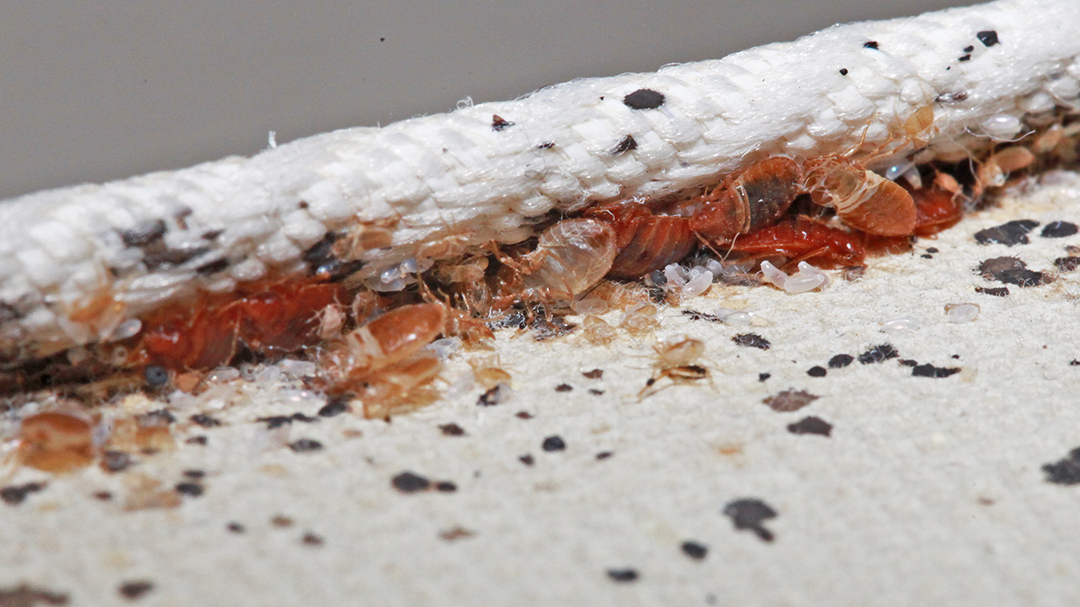
bed bugs and their feces on a mattress
Bed bugs produce an allergenic chemical called histamine to help them aggregate in sites like this mattress welt. Researchers worry that histamine may be adding another environmental allergen to our homes, like dust mites and cockroaches.
Bed bugs are trouble. They drink our blood. They soil our homes with their feces and cast skins. They keep us awake at night and add stress to our already stressed out lives. And they're revolting to most people.

Until now, if there was one positive thing that could be said about bed bugs, it might be that they haven't been found to carry communicable disease.  The impact of bed bugs seemed mainly to come down to sleepness nights and the economic sting of pest control expenses.

But newer studies seem to point to a darker side of these blood sucking pests. In 2011 Mississippi researchers Jerome Goddard and Richard deShazo scored postings from three popular bed bug websites.  They determined that nightmares, insomnia, anxiety, personal dysfunction and other psychological problems were common among online visitors. Some visitors to the sites were so severely shaken by their bed bug experiences that they scored high on a scale for posttraumatic stress disorder (PTSD).

In addition to mental health impacts, in 2014 bed bugs were implicated as potential carriers of the Chagas disease pathogen, Trypansoma cruziMichael Levy, one of the senior authors of the study, said "we've now shown that the bed bug can acquire and transmit the parasite [in mice]." But it remains to be seen whether bed bugs can pass the parasite to humans.  Currently Chagas disease is only known to be transmitted by kissing bugs--large blood sucking parasites most common in Central and South America. If enough people with Chagas disease are exposed to, and fed on by bed bugs, it's theoretically possible that bed bugs could become a more important vector of the disease in the U.S. than kissing bugs.

Also, we now know that the causative agent for trench fever and several other diseases, Bartonella quintana, can be acquired and passed on in bed bug feces.  The effects of trench fever range from mild to severe, even fatal. The disease has dogged soldiers in wartime for centuries, but until now doctors believed the pathogen was solely transmitted by body lice, insects prevalent among refugees, the homeless, and soldiers in camps and trenches. In a series of studies over the past six years researchers have been finding the bacteria in unexpected places. Traces of Bartonella DNA have been detected in head lice (like bed bugs, not common disease carriers), ticks, mites, and even cat flea feces.  Now the focus is on bed bugs. In 2015 French scientists found the bacterium could survive in bed bug feces for up to 18 days. As with Chagas disease, the evidence falls short of proof that bed bugs do or can carry this disease to humans; but in light of the ongoing bed bug epidemic, the data are worrisome.

Finally, thanks to a paper published this month by entomologists at the University of North Carolina, we now know that bed bugs are a major indoor source of the allergy-provoking chemical, histamine. Histamine was recently found to be one of the chemicals bed bugs use to attract other bed bugs into aggregations.  In this study researchers collected house dust from homes both with- and without-bed bugs, and tested the dust for histamines.

“Histamine levels in bed bug infested homes were at least 20 times higher than histamine levels in homes without bed bugs,” said Zachary DeVries, lead author of the paper. Even worse, histamine levels remained high, even three months after homes were treated with heat treatments.

“Histamines are used in skin and respiratory allergy tests... they cause a bump in skin tests and restrict breathing in respiratory tests,” DeVries said. In addition, he notes in the paper that histamine exposure can result in thinning of the epidermis, possibly posing significant skin effects.

While this study didn't look at health effects among people living with bed bugs, they speculate that risks posed by bed bug-produced histamine could rival the allergy- and asthma-causing effects of cockroaches and dust mites. They worry that because bed bugs live in bedrooms, where we spend the most amount of time indoors, the impacts might be multiplied.

This should remind us of our history with cockroach allergens. Not until the mid-1990s did public health experts and entomologists prove that cockroach allergens have a major impact on human health, especially in big cities. We've never looked at cockroaches in quite the same way since this discovery.

We may eventually have to rethink the way we think about bed bugs. Until then, keep tuned into bed bug news and continue to hone your bed bug fighting skills. After all, who more than your customers deserves a good night's sleep?

Monday, November 20, 2017

Entomologists Ignite in Denver: Part II.

In the first of my two posts about the annual conference of the Entomological Society of America (ESA), I covered some of the non-urban entomology sessions.  In today's post, I'll review some things that are a little more relevant to the business of pest control.


Technology and urban pests

While sitting through some papers at ESA that went way over my head, it occurred to me that entomology has changed a lot since I went to school. One of the biggest changes is in technology. Today's technology is much more sophisticated, and enables us to study insects in ways we could only dream of a few years ago. For example, our ability to amplify minute amounts of DNA from an insect's stomach lets us know what kind of bacteria live there, or what the insect's last meal was. Amazing.

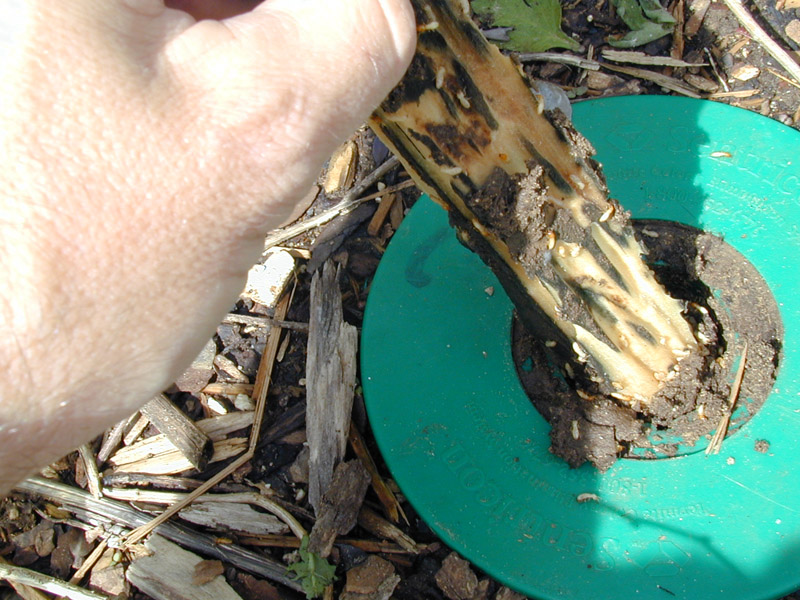
Wooden stake with Formosan termites. Unlike drywood termites,
which get their nitrogen from the air, subterranean termites
appear to get their nitrogen from ingesting soil. 
In one sense, this growing sophistication is a good thing.  It means that researchers now have better tools to understand the basic biology of insects.  On the other hand, there appears to be a trend in many universities to shy away from practical applied research and focus more on shiny new techniques and tools. In hallway conversations with industry reps, I'm told it's easy for hiring companies to find a young entomologist who knows her way around a genetics lab, but increasingly hard to find one who knows their way around a cockroach-infested apartment or a PMP's tool box.

One of my favorite student papers, with a balance of good basic science and applied biology, was also one of the shortest.  Aaron Mullins, University of Florida, explained in his three minute (!) paper that biologists have long known that drywood termites get much of the nitrogen (N) they need from the air (N is an essential element for protein building and reproduction). This makes sense because drywood termites live entirely in relatively low N-containing wood. Mullins wondered if the same was true for subterranean termites. He found that Formosan termites housed in organic (N) rich soil grew their colonies 10X as fast as similar colonies living in clean sand. He concluded from this and other evidence that subterranean termites get their N from the soil rather than air.  I'm not sure of the long-term impacts of this new discovery, but it will likely affect how we rear termites in the lab for experiments.

Jose Pietri with Apex Bait Technologies gave an interesting paper with potentially big implications. Testing the hypothesis that symbiotic gut microbes might play a role in cockroach resistance to insecticides, Pietri and colleague Dangshang Liang fed insecticide-resistant cockroaches a bait mixed with an antibiotic, doxycycline. They found a significant  increase in mortality from the bait with doxycycline compared to bait without the antibiotic. When the antibiotic bait was fed to insecticide-susceptible strains, however, it was no more effective than the bait without antibiotic. If confirmed, this might prolong the usefulness of some insecticide active ingredients for resistant cockroaches.

Ed Vargo, of Texas A&M University, reported that tawny crazy ant, Nylanderia fulva, infested five new Texas counties in 2017, bringing the current total to 39. He found that ants from different crazy ant colonies were not aggressive to one another, and he used sophisticated genetic tools to discover that there were no significant genetic differences among nests in a site or between states. These data suggest that TCA has extended colonies that might range over many miles.  This diffuse nest structure, similar to Argentine ant, at least partly explains why TCA is so difficult to control.

Bed bugs

Are even entomologists getting weary of bed bugs? Maybe. Bed bugs were the subject of 31 papers and posters this year, down from last year's 46 (and a record 56 papers in 2011).  Most of this year's talks were given during a symposium called Advances in the Biology and Management of Modern Bed Bugs. The session featured authors of a new book of the same name to come out in 2018.  If you dig scholarly work on bed bugs, this might be a nice addition to your library--if you can afford it (listed at $200, not unusual for academic books). According to the publisher, it will be the first comprehensive academic review of bed bugs since 1966. NPMA attendees will recognize the names of many U.S. authors like Rick Cooper, Changlu Wang, Dini Miller, and Jim Fredericks.  And there will be a number of international authors as well.

I'm saving up for my copy, but the title got me wondering, "What's a modern bed bug?" So I asked Dini Miller, of Virginia Tech and one of the editors of the book.  She replied that "these are not your grandmother's bed bugs." These are the "incredibly resistant" bed bugs that have made their comeback over the past 20 years. Modern bed bugs have thicker cuticles to resist insecticide penetration, tougher nerves, and better enzymes to detoxify these insecticides. Given that the tropical and the common species of bed bug both have developed these characters, the book theorizes that malaria control programs in Africa, where both species live together and are regularly exposed to DDT and pyrethroids, may have been the breeding ground for these new "super bugs."  Anyway, there is obviously a need for an updated book on on bed bugs.

Research Highlights

Today's bed bugs are more difficult to kill with insecticides. All
the more reason to use a variety of control tactics.
The Highlights of Urban Entomology session is one of my favorites for catching up on papers I may not have had time to read this year. This year's presenter was Chow-Yang Lee, Professor at the Universiti Sains Malaysia, and soon to be with the University of California at Riverside. He and colleagues recently reviewed the literature and found that resistance to chlorfenapyr (Phantom) is "brewing" among modern bed bug populations. Also, bed bugs tested recently from Cincinnati and Michigan show moderate to high resistance to neonicotinoids used in products like Temprid and Transport, Mikron and Tandem. If you had hope that baits might be the answer, a study by Yvonne Matos and coauthors found that secondary kill of bed bugs is much lower than for cockroaches. Even if a suitable way to bait for bed bugs was found, current evidence suggests that baits would likely not be as effective as cockroach baits.

Finding better formulations is a productive field for improving pest control. Vander Meer and Milne reported improved control of fire ants with a waterproof formulation of Distance fire ant bait. Made from dried distillers' grain with solubles and shrimp shells, it outperformed standard corn grit baits. This formulation will likely be more effective as a control for red imported fire ant and little fire ants, especially in wetter locales.

Literature reviews are papers that synthesize lots of scattered research into something that makes sense of the topic. A good literature review is invaluable, especially if you're not an expert. So, I was glad to learn of a new (and free via this link) literature review on fleas, recently completed by the venerable urban entomologist, Mike Rust. Rust looked at some of the more recent advancements in flea borne diseases, new control products, and resistance to insecticides. Contrary to what you might hear from pet owners, there is little evidence that fleas have developed resistance to the very powerful on-animal treatments like fipronil, imidacloprid or lufenuron. On the other hand, pyrethroid resistance by fleas is becoming more widespread. While on-animal treatments solve most problems, pyrethroid resistance poses a dilemma for PMPs needing to treat flea infestations that arise from non-pets, such as feral animals (in a crawl space, say, or in backyards). Not many non-pyrethroid broadcast spray alternatives are available for this task.

Certification

Lastly, I had the opportunity to attend a committee meeting on the ACE (Associate Certified Entomologist) program. This is a program for anyone in pest control who wishes to identify themselves as a certified entomologist. Since last year, Willet Hossfeld has taken over administrative duties for the Certification program.  He reported that there are currently 1025 active ACEs nationwide, with 267 in the application process. If you ever have a question about the certification application, he's the one to contact.

The main topic of discussion by the support committee this year concerned the difficulty of the certification exam (40% pass rate on first try), and how that has discouraged many highly qualified folks from taking it. Several at the meeting noted how useful the study guide that I and Richard Levine co-authored a few years ago, has been.  But there still seems to be a need for group prep classes to better prepare ACE candidates for the exam.  The committee took steps to begin updating the practice exam for those preparing for the test, and discussed how to make more prep classes available.  A prep class PowerPoint set has long been available to anyone who wants to conduct a prep class. This PowerPoint set will be revised and updated in 2018.  Any BCE or ACE who wants to sponsor a prep class, should contact Willet at ESA and he can tell you how it's done and how to get a copy of the prep materials.

You're Invited

Pest management professionals also attend these national meetings. If you haven't yet attended, I encourage you to give it a try (the next two meetings are in Vancouver BC in 2018, and St. Louis MO in 2019). The meeting is a great time to make new friends and professional contacts; and while it's not all pest management oriented, there are always good urban entomology sessions featuring cutting edge research. If you decide to attend, don't be shy--introduce yourself to speakers and others in hallways. Consider attending the Certification Board meetings; visitors are welcome. And bring a few extra bucks for a t-shirt or pet tarantula. Your coworkers will look at you strangely, and you'll know what it's like to call yourself an entomologist.

Monday, August 28, 2017

Insects and floodwaters

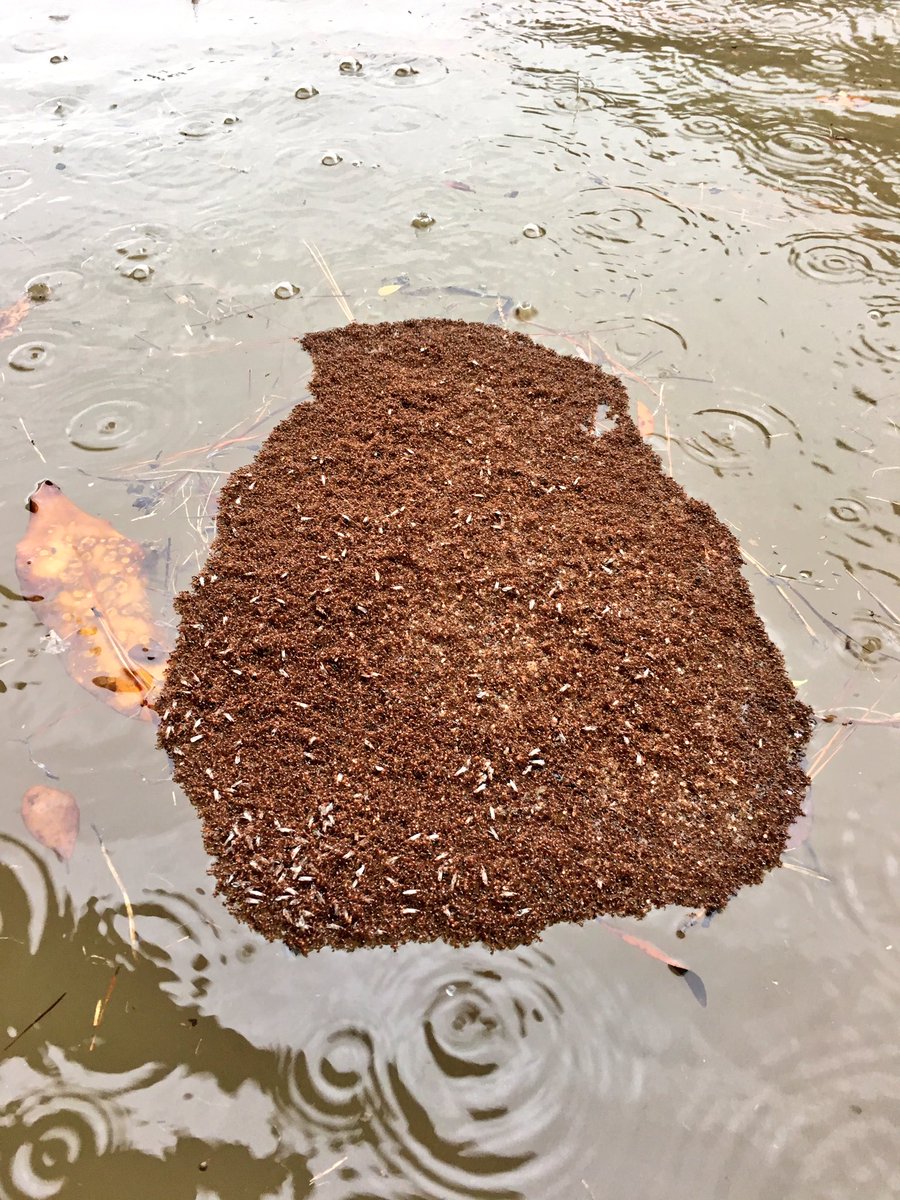
Fire ant floating colony in Houston floodwaters.
Photo by NBC DFW  @OmarVillafranca
Many in the pest control industry find themselves in the midst of the devastating floods hitting much of south and east Texas this week.  If so, it may be a good time to remind ourselves of some unique pest challenges associated with high water.

Flooding brings all sorts of wildlife into unusually close contact with people, but few critters are more dangerous than fire ants. When floods occur, fire ants exit the ground and float, instinctively linking their legs and forming a floating mat which is nearly impossible to sink. When they inevitably bump into a dry object like a tree, a boat or a person, the ant mass "explodes" with ants quickly exiting the mass and swarming the object.

Diving underwater, or splashing water on the ants, will not help.  The best option is soapy water, which is pretty good at killing the ants and helping drown a floating ant island.  According to the Texas A&M AgriLife Extension publication, "Flooding and Fire Ants:Protecting Yourself and Your Family", two tablespoons of soap in a gallon of water, sprayed on a floating mat is effective at drowning ants.  If any of you are engaged in water rescue this week, carrying a supply of soap along with a squirt bottle would be a good idea.

You might not have thought of it, but bed bugs can also become an issue after a public emergency like a tornado or flood.  When lots of people are brought together in an emergency shelter situation, the risk of bed bug encounters goes up.  The University of Minnesota has put together a nice publication on the subject. If you are in a community hosting an emergency shelter consider offering your services to inspect shelters and treat for bed bugs as necessary.  Don't forget the diatomaceous earth and silica aerogel dusts as a means of providing significant control for shelter bedding at minimal risk.

Lastly, after the storm is long gone be prepared for mosquitoes.  The primary mosquito species in the Texas Coastal Bend area are the salt marsh and pasture-land breeding mosquitoes. These are difficult to control at their breeding sites, short of aerial mosquito control campaigns.  But to some extent, these mosquitoes can be controlled in backyards with residual mosquito adulticides. If your company does residential pest control, but hasn't yet gotten into the adult mosquito control business, this may be a good time to start. One good way to educate your customers about the mosquito threat is the Mosquito Safari website.


Friday, May 27, 2016

Highlights of NCUE

Albuquerque, NM was a beautiful (and tasty)
location for this year's NCUE meeting.
One of the first professional meetings I attended as a newly minted PhD entomologist was the National Conference of Urban Entomology. Held that year in College Park, Maryland, the meeting was a revelation.  Finally, I thought to myself, a gathering of people who understand what I do for a living--like a Cheers bar for entomologists!

We've all been to parties and been asked what we do for a living. Answer that you're "an entomologist who specializes in structural insect pests", and if you're lucky you'll get a wan smile. Rarely does anyone get it. Not so at the National Conference of Urban Entomology. The NCUE is a gathering of very friendly, slightly nerdy, science-oriented people who love to talk about urban insects and pest control.  No one in this group needs bother with common names when discussing Periplaneta americana, or Coptotermes formosanus. Talks like "Gut bacteria mediate aggregation in the German cockroach" are guaranteed to draw a crowd.

This year's NCUE meeting was held in Albuquerque, NM, and it did not disappoint.  Besides a short, but packed agenda of buggy stuff, Albuquerque was a wonderful place to meet.  Not a whiff of Breaking Bad drug labs, but lots of clear skies, mountain and desert views, and great New Mexican cuisine. (Oh, and The Donald was even in town one night!)

To give you an idea about what all of us bug scientists talked about in the sessions and hallways this week, here are some of my notes to self:
  • Pest exclusion was the dominant topic for one session and was revisited throughout the meeting.  Imagine if homes and offices could be designed to keep pests out, or at least make them uncomfortable.  Dr. Jody Gangloff-Kaufman from the New York State IPM Program talked about two relatively new working groups dedicated to promoting better building standards to resist pests.  They call their project SCOPE (Scientific Coalition of Pest Exclusion), and the two groups focus on residential and commercial buildings, respectively.  The group has been meeting for approximately 2 years and has about 120 members.  Goals are to assemble a database of literature that supports pest exclusion (PE) concepts, and to provide checklists for builders and architects to promote better PE. A bit of controversy arose when a session speaker suggested that perhaps the typical pest control business model would not willingly embrace pest-resistant buildings. A PMP participant objected saying that offering pest proofing was an important part of their business model and how their company remained competitive.
  • Dr. Chris Geiger, with the City of San Francisco, spoke about how IPM and PE principles have influenced the LEED (Leadership in Energy and Environmental Design) program. LEED remains one of the most influential and successful certification programs ever, contributing $80.6 billion to GDP between 2011-2014 and changing the way architects design modern buildings. Dr. Geiger noted that 59% of LEED-for-existing-buildings applications take advantage of points for having an IPM program in place.
         Although LEED recognizes the importance of IPM to environmentally sound construction and maintenance of buildings, it has not provided strong leadership on pest exclusion. Consequently, in 2013 Geiger led a group to produce a guidance document for architects and builders to provide specific examples of how to make buildings more pest resistant.  These guidelines are being put to work in some major public housing renovations in San Francisco, and have been offered to builders as a standard to reference when trying to achieve IPM points in LEED projects.
         Dr. Geiger hopes to update these guidelines this year, and is actively seeking experts in pest control, engineering, entomology, and architecture to be a part of the process.  If you are interested in joining his group, go to this web form to add yourself to the list of participants.
  • Dr. Tim Husen with Rollins Corporation suggested that PMPs needing fast access to a listing of low toxicity products acceptable to LEED certifiers can use a mobile phone app called PestSmart, available through the Pesticide Research Institute. I found and downloaded this free app quickly on the App Store for my iPhone.  The listing is based on criteria used by the City of San Francisco in their (now extinct) Tier III list of low toxicity pesticides.  This famed list is no longer supported or updated by the City of SF, but is still sometimes referenced by architects, especially under the now dated, V3 (2009) LEED credits.  Keep in mind that the PestSmart app provides an assessment of likely toxicity, but does not take into account risk of exposure, an important component of hazard (toxicity X exposure = hazard).  
  • Famed "rodentologist," Dr. Bobby Corrigan, also spoke on rat exclusion, and provided a case history from the National Park Service's African Burial Ground Monument.  A highly sensitive, historically significant site in New York City, the property was heavily rodent infested prior to Corrigan's consultation.  Xcluder Geo Mesh was installed under sod at the site, and burrows were gassed with dry ice (2 lbs per burrow system) to successfully rid the property of these "diabolically clever" pests, as Corrigan described them. Though initially more expensive, Corrigan believes the use of CO2 and advanced mesh barriers like this could be very useful for eradicating rodents from sensitive locations.
  • Not surprisingly, mosquitoes were a hot topic of discussion this year. PMPs are beginning to shift their company business models to include mosquito control. Orkin's Dr. Ron Harrison noted that mosquitoes are his company's number 1 annual service offering. Rick Bell, with Arrow Exterminating, reported that his company's mosquito revenue has gone from $39,000 in 2004 to $6.5 million in 2015, all with little reliance on automated backyard mosquito misting systems.  He noted that Arrow's mosquito control customers are among their most loyal, with a 92% annual retention rate. 
  • Dr. Joe Barile of Bayer Environmental Science cautioned the industry about how mosquito control is marketed. He recommended use of the term "nuisance abatement" rather than any language that implied disease elimination or protection from mosquito borne disease.
  • Dr. Grayson Brown from the University of Kentucky summarized some of the latest promising technologies for residential mosquito control. He reported that the Innovative Vector Control Consortium (IVCC), a group founded over 10 years ago to seek solutions to mosquito borne disease, is currently evaluating 9 new classes of active ingredients for vector control. If even a few of these insecticides prove safe and effective, it could revolutionize adult mosquito control. He also noted that essential oils are also receiving more study as insecticides, repellents and excitatory agents to enhance the effectiveness of other products.
  • Although it appears that most pest control companies rely largely on barrier sprays as a core of their mosquito control programs, pollinator and beneficial insect concerns are an issue. Consequently, there is much interest in alternatives to backyard sprays for mosquito control. Among the promising alternatives, according to Brown, are autocidal gravid oviposition (AGO) traps.  These are artificial breeding sites for Aedes mosquitoes which trap, kill, contaminate or sterilize any female mosquito lured in to lay eggs.  In one study in Puerto Rico, 3-4 large AGO sticky traps per yard were sufficient to reduce Aedes mosquito populations 53-70% and prevented mosquito outbreaks following rain in 81% of homes. 
  • Pyriproxyfen, the insect growth regulator in Archer® and Nygard® insecticides, is also being tested as an active ingredient in some autocidal traps.  Research suggests that besides killing their mosquito offspring before they emerge from treated water or cups, pyriproxyfen residues in these traps transfer via the mosquito herself to other breeding sites through a process called auto-dissemination. This is one of the coolest and most selective mosquito controls I've heard of.  If proven in the field, a PMP or homeowner, could put a few gravid traps out in the yard for minimal cost and get season long mosquito suppression with no risk to bees, butterflies or other beneficial insects.  In combination with sprays and other control methods, it might be possible to achieve a high level of control and reclaim mosquito infested backyards with minimal harm to good bugs. Currently few lethal ovitraps are commercially available; but watch for new products to enter the market soon.
  • No gathering of urban entomologists would be complete without a few papers on bed bugs. Though the number of bed bug papers was down this year, those presented were oriented towards the practical.  Three papers came from Virginia Tech.  Dr. Dini Miller presented on bed bug vacuums. She found that all the battery powered vacuums she tested (several Black and Decker, and Dyson models) were surprisingly effective at removing adults, nymphs, exuviae and eggs. Besides offering a cleaner and more allergen free environment, it is notable that vacuums remove the exuvia (cast skins) of bed bugs.  This is important for control, she noted, as cast skins may be used by bed bug nymphs as a refuge from sprays.  She also recommended using disposable, knee high, nylon stockings over the mouth of your vacuum (which she colorfully called "condoms for your vacuum") to isolate your catches and reduce the risk of bringing bed bugs back to the office.
  • Katlyn Amos, graduate student at VT, tested two multi-action insecticides against pyrethroid resistant bed bugs.  Both Tandem and Crossfire, a new product from MGK, performed well against these resistant bugs. 
  • Molly Stedfast reported on mattress encasements for bed bugs.  One of her most important findings was that not all bed bug encasements were bite-proof. After stretching encasement fabric over the mouths of glass jars filled with bed bugs, and applying the fabric-covered mouths to the arms and legs of volunteers, many of the bed bugs were able to successfully feed. But as Stedfast noted, bite resistance is not an issue for box springs.  Nor may it be that critical for bed mattresses either.  Bed bug mouthparts are only about 1 mm long, so once covered with a mattress protector and sheet, the average sleeper should be well protected from any bed bugs trapped in a tight encasement.  Tight zippers and rip resistance are probably more important features when selecting an encasement. 
  • In the category of really-interesting-science-that-may-not-have-an-immediate-application, Dr. Rachel Adams, University of California-Berkeley, talked about the microbial diversity of homes.  The ability of science now to take DNA swabs and identify 40 microbes from one's forehead has rapidly progressed from my college microbiology class where "cutting edge" meant plating out and isolating a few microbe colonies on Petri dishes. This new technology means we can now isolate hundreds or thousands of fungi and bacterial DNA from the average home. The challenge we have today is understanding what these microbes are doing.  Are they reproducing, or just there because they floated in from outdoors?  And what are their human health impacts, if any? We know that microbes can positively or negatively affect our health, allergies and possibly ability to ward off disease.  One example Dr. Adams gave was the so-called 'farm effect', where children who grow up exposed to bacteria associated with cows and manure have asthma rates as much as 4X lower than urban-raised children. Insects may play a role in delivery of some of these microbes, good or bad, into homes.
  • Finally,  Dr. Coby Schal, one of the most interesting and creative urban entomology researchers in the country today, spoke about the gut bacteria in German cockroaches (Blatella germanica to us entomologists!). His research has shown that it may be bacteria that are responsible for much of cockroach aggregation behavior.  Cockroaches with their full gut bacterial complement grew up faster, reproduced faster, found mates faster, and were more efficient foragers compared to cockroaches without their gut microbes.  In addition, cockroaches were more attracted to the poop of other cockroaches with buggy guts, suggesting that these microbes might hold the key to developing a better cockroach attractant for trapping and control purposes. And you might be surprised how much cockroach feces humans are exposed to. A colony of 1,000 German cockroaches (a moderate infestation in some restaurants and apartments) produces an estimated 5 grams of feces per night, or nearly 2 Kg (4 lbs) of feces a year. These same feces contain 7.5 million units of Bla-g antigens, which can cause allergies or asthma in humans in amounts as little as 8 units.
Now you know what urban entomologists talk about when they get together. The subject matter may be boring, humorous or even distasteful to the average person; but be thankful that someone is interested in this stuff.  As for me, I'm glad there's at least one place where everyone knows my name. Cheers!

Wednesday, December 23, 2015

Managing bed bugs in multifamily housing--insights from ESA

The Minneapolis, MN Convention Center hosted this year's
annual conference of the Entomological Society of America
It's been almost 15 years since bed bugs started as a hot symposium topic at the annual conference of the Entomological Society of America. And following this year's meeting in Minneapolis, it seems like solutions are still elusive, especially when it comes to multifamily housing.

As usual for me during these marathon meetings, I attended as many talks about bed bugs as I could.  But this year I was especially attracted to discussions about bed bug management in multifamily housing, a.k.a. apartment complexes.  There were several interesting papers related to the topic, but three of them seemed to do an exceptional job of illuminating the issue and possible solutions.

Virginia Tech and Apartment Managers

I know of no one who exhibits more passion about bed bug management in multifamily housing than Dini Miller of Virginia Tech University.  In fact, to keep up with the overwhelming education demands in this area, her group recently established a Bed Bug and Urban Pest Information Center to better educate Virginians (and especially apartment managers) about bed bug control.

According to Miller, a big part of the reason that bed bugs are such a problem in apartment complexes is that they are not just a pest problem. Bed bugs are also a social problem with a unique human dimension. In her ESA talk Miller observed that in her experience the worst bed bug infestations seem to occur with individuals who have problems that are much worse than bed bugs (e.g., health issues, finances, safety and security).  Such tenants, for a variety of reasons, are less likely to complain to management about bed bugs.  On the other hand, the most vocal complaints often come from those with relatively small-scale bed bug problems. Therefore, when an apartment complex bed bug control program is primarily complaint-driven, the program is doomed to miss what should be the highest priority units.

Miller believes that good apartment management is key to an effective bed bug program. To be successful, she argues, (1) managers must be committed to solving the problem, (2) the response needs to be proportionate to the problem (less money and time on small infestations and more effort on finding a eliminating heavy infestations), (3) apartment preparation requirements must be reasonable (with assistance provided for the elderly), and (4) managers must be better informed and involved with the pest control company in the IPM process.

For managers who don't feel that bed bugs are that big an issue, Miller notes that one 4,000 unit complex she works with spends $500,000 annually on bed bug control.  And liability is also a big issue. In Iowa in 2014, residents of a public housing complex successfully sued management for $2.45 million for an uncontrolled bed bug infestation.

Rutgers and Bed Bug IPM

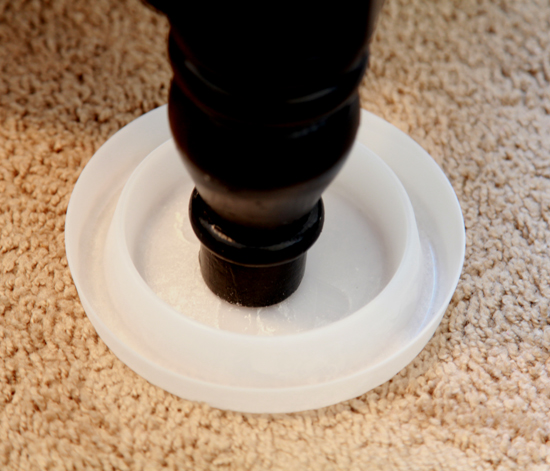
Climbup interceptor cups were effective at detecting bed bug
infestations 95% of the time in the Cooper study. Pitfall traps
like the Climbup detect 3X as many low level infestations
than would otherwise be reported by tenants.  
Another leading bed bug researcher, Changlu Wang from Rutgers University, offered his own perspective on reasons for the ongoing bed bug crisis in multifamily housing.  He said that the biggest challenges come from (1) heavy infestations associated with clutter, (2) widespread resistance to insecticides among bed bugs, (3) the small size and difficulty in finding bed bugs (thus determining whether an infestation is eliminated), and (4) the need for cooperation from residents.

As background, Wang and his laboratory have undertaken some ambitious field trials in the past few years.  I say ambitious because it is extraordinarily difficult to do large scale control studies in apartments.  Not only do researchers have to work with the same unpredictable clients you work with daily, they also have to get approval from a group called the Institutional Review Board (IRB).  Each University has an IRB that oversees any research done with humans or animals, ensuring that the research is done ethically and without harm to its subjects. Getting through the process requires lots of paperwork and is enough to make you crazy.

In a study just published by Wang's recent Ph.D. student, Rick Cooper, an IPM program was pilot tested at a four building complex with 358 units housing elderly and disabled residents.  The IPM program consisted of resident education, initial monitoring with ClimbUp® interceptors to determine which units were infested, encasements, vacuuming, steam, laundering assistance, and insecticide applications with diatomaceous earth and chlorfenapyr.  Units with less than 5 bed bugs received non-chemical treatment only.  Units that continued to be infested with more than 5 bed bugs after the first treatment received spot treatments with Transport GHP.  Followup treatments in all originally infested units were continued every two weeks until no bed bugs were captured in interceptors, seen, or reported by the residents for three consecutive visits.

Relationship between the initial number of bed bugs in a treated
apartment and the number of treatment visits needed to eliminate
the problem.  An initial infestation of 100 bed bugs required  ca.
10 visits to verify elimination. From Cooper et al. Jan. 2015.
Pest Management Sci.
Cooper's experiment is the first research to document the success of a bed bug IPM protocol in an entire apartment complex. Key findings of the study were:

  • Management was aware of only 29% of the infestations before Climbup interceptors were used.
  • It took an average of 2 to 4 minutes (they got faster throughout the study) to install approximately 10 interceptors per apartment.
  • It took less than 4 minutes to inspect Climbups compared to over 15 minutes to conduct a visual inspection of an apartment.
  • Because of the difficulty in detecting low levels of bed bugs, the authors defined "elimination" as three consecutive visits with no live bed bugs detected by Climbup counts, visual inspections and resident reports. The authors considered the stringent elimination protocol an essential part of the IPM program.
  • Researchers estimated the overall infestation rate of the apartment complex was reduced from 15% to 2.8% at 6-months and to 2.2% at 12-months, an 85% improvement. 
  • In infested apartments the mean number of bed bugs trapped was reduced by 96% and 98% after 6- and 12-months, respectively. 
  • Heavily infested apartments at the beginning of the study required the most visits to achieve control, hence costing the complex more. 
  • 62% of residents with bed bugs were not aware that they had bed bugs, including one oblivious resident whose apartment had over 4,000 bed bugs, many of which were openly crawling on the bed during inspection.
  • 76% of residents who thought their bed bug problem was solved through treatment still had bed bugs detectable with Climbups, supporting the idea that customer satisfaction should not be the sole criterion for determining when treatments can be stopped.
  • Average labor and chemical costs for the 12 month treatment for 66 apartments was $456 per apartment, a figure in line with other programs and which the authors believe can be reduced in subsequent years of a contract.
A full copy of Cooper's excellent study can be accessed here.

University of California Survey

In contrast to what ought to be done about bed bugs, Andrew Sutherland of the University of California's Statewide IPM Program, reported on what is being done for bed bugs in the western region of the U.S.  He surveyed 114 PMPs in California and other western states and provided some useful insights into current industry bed bug practices.  His study confirmed Miller's observation that compared to hotels and single-family homes, multifamily housing was rated by respondents as having the worst infestations, the most-difficult to control infestations, and being the most often treated kind of account.  When asked about monitoring methods used for bed bugs, 98% of respondents employed visual inspections "most of the time".  Pitfall traps were used at least once by about 75% of respondents; but only 20% said they used this tool "most of the time".  About 40% of respondents used canine detection at least once.  Surprisingly, glue boards had been used by about 75% of respondents, at about the same frequency as the far superior pitfall traps.  

Regarding control methods, insecticides were used "most of the time" by 94% of respondents. Desiccants were used to some extent by 85% of respondents, but only by 57% "most of the time". Encasements were used "most of the time" by 50% of respondents.  And 53% of respondents never used volumetric heat treatment--not surprising given the relatively high initial cost of the equipment. 

Among liquid sprays, the insecticides used "most often" by respondents were neonicotinoid+pyrethroid combination products (53%), followed by chlorfenapyr (20%), followed by pyrethroids (17%). Among dusts, pyrethrins (surprise to me) were most commonly used, and least used were the highly promising silica aerogels.  A copy of the PMP portion of his survey results has been published in PCT magazine.

In addition to PMPs, Sutherland surveyed 167 housing management professionals, and the results were also revealing. Eighty-seven percent of respondents said that bed bug service in their facilities was complaint-based, just what the Rutger's and Virginia Tech entomologists said doesn't work. Also, 72% of respondents make their tenants responsible for preparing for a bed bug treatment--not a good idea for elderly and disabled who are often unable to perform prep tasks.  And 69% of respondents said they used a bed bug addendum as part of their lease agreement.  Such addenda generally put responsibility for bed bugs back on the tenant, discouraging many from reporting infestations when they are small and easily treated. These latter results, especially, suggest that the pest control industry, and we in Extension, have some work to do.

These three talks for me illustrated why bed bug management, especially in multifamily housing, remains a challenge.  Within the industry better IPM protocols are needed, especially protocols that rely on proactive monitoring and early intervention, sanitation, physical and mechanical controls, and conservative, targeted use of carefully chosen pesticides. I think we also need to take a closer look at desiccant dusts, perhaps an underused, low toxicity tool in the bed bug tool kit.  Within the apartment industry, managers and tenants need to be educated about the importance of monitoring-based protocols, minimum prep models, and reversing the "blame the tenant" mindset. All research shows that the sooner a bed bug infestation is detected, the better the prognosis for a quick and less-costly response.

Given that approximately 26 million households reside in multifamily rental housing (2014 data from National Multifamily Housing Council), there is hardly any pest control issue in the U.S. today that affects more people in a more personal way. The way that pest management and multifamily housing businesses respond to the challenges of bed bugs in the coming years will say a lot about the character of these two industries.


Wednesday, January 14, 2015

Bed bugs in China

A recent article published in the Journal of Medical Entomology by entomologists at South China Agricultural University caught my eye today. The study reported on bed bug infestation rates of homes in two south China cities.  While the results were not very detailed, they do give an interesting peek inside the world's most populous country with some of the world's most crowded cities.

The size of its cities, and the potential pest control market, in China is staggering. The combined population of the two cities in this study is 18.75 million (Texas population is about 27 million), and each of the two cities in the survey support approximately 1000 pest control companies (Texas supports about 3,000 companies statewide).

In addition to dense urban populations, city residents are highly mobile.  In one of the cities, the transient population (recent arrivals from the countryside and other cities) was estimated at 78%! Such conditions seem tailor-made for bed bugs, who are easily transported in luggage.  In addition, in the winter most of the population in the two cities simply vanishes into the countryside for the very important Spring Festival.

Surprisingly, until now the bed bug has not been reported as a major, widespread pest in China; though according to this survey, that may be changing.  A preliminary survey of 11 companies from the two cities estimated that 35% of all accounts being treated involved bed bugs. In examining the records of two medium to large sized pest control companies, 29-42% of all service visits involved bed bug infestations. In the largest city, Shenzhen, 91.1% of all rooms in apartments treated were infested with bed bugs, and 56% of workers quarters were treated for bed bugs.  In the neighboring city of Dongguan, 83.7% of serviced apartments had bed bugs, and 61% of worker quarters treated were infested.

By the way, China has double trouble with both the tropical bed bug, Cimex hemipterus, and the common bed bug, C. lectularius.

With its 1.3 billion citizens, China is a huge pest control market. The same with Mexico and other Latin American countries.  I've been thinking about this recently because the U.S. is hosting the International Congress on Entomology in 2016 in Orlando, FL. This will be the largest gathering of entomologists in the world, including top experts in urban and structural pest control.  It seems to me that PMPs as well as research and extension entomologists have a lot to learn about the way pest control is conducted in other countries. So if you are ready to learn more about your global partners in pest control, consider making a trip to the ICE in two years.

Thursday, December 18, 2014

Best essential oil products for bed bugs

If you're a pest management professional in the bed bug business, I suspect the last thing you might want to hear about is a good consumer treatment for bed bugs. But the latest study published the Journal of Economic Entomology by Changlu Wang's lab at Rutgers University may hold a little good news for everyone.

In the study results recently reported in PCT magazine, Narinderpal Singh, Wang and Richard Cooper identified two low-toxicity, over-the-counter products that are surprisingly effective against both bed bugs and their eggs. EcoRaider™ and Bed Bug Patrol™ are essential oil-based insecticides available both in retail stores and via the Internet.

One of the experimental setups used in the Singh et al paper in
the Journal of Economic Entomology. Laboratory tests are
not always good predictors of what will work well under real
world conditions; but they are most useful in identifying
products less likely to work well.
The researchers looked at nine plant oil-based products and two detergents marketed for bed bug control.  In the first evaluations bed bugs were sprayed directly with the 11 products, as well as with the pyrethroid standards Temprid® SC and Demand® CS. Only two of the consumer products provided greater than 90% control.  A product called EcoRaider™ (1% geraniol, 1% cedar extract, and 2% sodium lauryl sulfate) provided 100% control of bed bug nymphs after 10 days. A second product, Bed Bug Patrol™ (0.003% clove oil, 1% peppermint oil, and 1.3% sodium lauryl sulfate) provided 91-92 percent mortality after 10 days in two trials. These essential oil products were slower than the professional insecticide Temprid® SC, but after 10 days they provided the statistically same control as Temprid®.

We all know the toughest life stage of bed bugs to kill is the egg. Singh et al. applied each of the sprays directly to exposed 2-3 day-old eggs.  EcoRaider™ controlled 86% of eggs, better than any other product, including the professional standards which gave less than 17% control.

Of course a good insecticide should not only kill on direct contact, but should leave a residue that continues to kill, and not repel, after it dries. Singh and colleagues pitted EcoRaider™ and Bed Bug Patrol™ against the two pyrethroids by confining bed bugs for five minutes on one-day old residues on cotton fabric. They then removed the bugs, placed them in clean dishes and observed. After ten days, EcoRaider™ and Bed Bug Patrol™ provided an impressive 93% mortality, equivalent to Temprid® SC, and significantly better better than Demand® CS. However when bed bugs were allowed to choose between resting on treated or untreated surfaces, the two professional products were significantly better.  

So don't dump your Temprids, Transports and Tandems just yet. Bed bugs always have a choice where to rest and walk in the real world, and these results suggest that when given a choice they might avoid spots treated with plant-oil products. And even the researchers admit that all spray exposures in this test were applied under ideal conditions. It's likely that results in the field, where bed bugs are almost always protected in cracks and crevices of furniture and bedding, will not be as good. Perhaps most importantly, even the best bed bug treatments miss directly contacting all bed bugs.  Hence residual control is very important and rightly remains the holy grail of bed bug control.  Today's modern insecticides may not always excel at long-term residual control of resistant bed bugs; but they are likely to be better than the best essential oil-based insecticide. The plant oil-based sprays in this test were only aged for a day, and given the volatility of plant oils I would not expect them to last much longer.

Nevertheless, low-toxicity "organic" pesticides have established a strong niche in the professional pest control business today. I applaud the efforts of the Rutgers researchers in sifting through the many "natural" products vying for bed bug market share. Singh et al's work may not be the last word on the subject of which green products work and which don't; but the methodology appears sound and the work thorough.  Based on what I read in the paper, if I were looking for a green insecticide to supplement my bed bug program (even one that was available to consumers), I would take a hard look at their top two performers.

The other insecticides evaluated in this study included Bed Bug Bully, Bed Bug Fix, Ecoexempt IC2, Essentria, Rest Assured, Green Rest Easy, and Stop Bugging Me. The two detergents tested included Eradicator and Bed Bug 911 Exterminator.

Please note that mentions of trade names in this article does not imply endorsement, but are included for educational purposes only.