Showing posts with label mosquitoes. Show all posts

Tuesday, September 5, 2017

A Texas sized mosquito event

Mosquito covered shirt in Port LaVaca, TX. Photo
by Richard Murray on Facebook.
Remember last week when I warned that mosquitoes would be hurricane Harvey's final gift?  Well, mosquitoes are here as seen in this Facebook image, taken in Port Lavaca, TX this weekend.

The giant mosquitoes in this picture are probably in the genus Psorophora, (sore ROFF oh ruh) one of our largest, most painful and aggressive biters.  Psorophora mosquitoes have some impressive chops when it comes to survival.  One of the so-called floodwater mosquito species, they lay their eggs on land rather than water like most mosquitoes.  But not just on any land--eggs are laid at the edges of receding floodwaters, where they will re-hydrate and hatch during the next large rain event.

Because Psorophora are opportunists, taking advantage of brief rainstorms, they must have a quick lifespan.  The larvae of floodwater species like Psorophora are the speediest growers of all mosquitoes.  They need as little as 3 to 3.5 days of standing water to pass through the four molts common to mosquitoes. The pupal stage has even adapted to survive and complete its development on the mud surface of drying puddles.

What we see in this picture is evidence that floodwater mosquitoes were primed at the pump when Harvey hit the upper Gulf coast two weeks ago.  When the rains came, mosquito eggs hatched across thousands of square miles of coastal prairie and marsh, and billions of Psorophora larvae raced through childhood. Add to this that Harvey's rainfall impacted over 400 miles of Gulf shoreline, dumping an estimated 27 trillion gallons of water. The rainfall was epic and completely unprecedented. The city of Houston doubled it's previous all time monthly rainfall record with 39.11 inches (and Houston gets lots of rain). That's 400 miles of Gulf coast prairies producing mosquitoes, also unprecedented, I suspect.

So don't be surprised to read and hear lots of mosquito stories over the next couple of weeks.  If you have to be out and about in this part of Texas, there is protection you can carry. For extreme conditions a mosquito head net will be necessary. Wear light colored, tight knit, long-sleeved fabrics. T-shirts or short-sleeved shirts will not be enough.  Permethrin-impregnated shirts and pants may be worth their weight in gold.  And don't forget to bring DEET repellent. Lots of it.

Thanks a lot, Harvey!

Monday, August 28, 2017

Insects and floodwaters

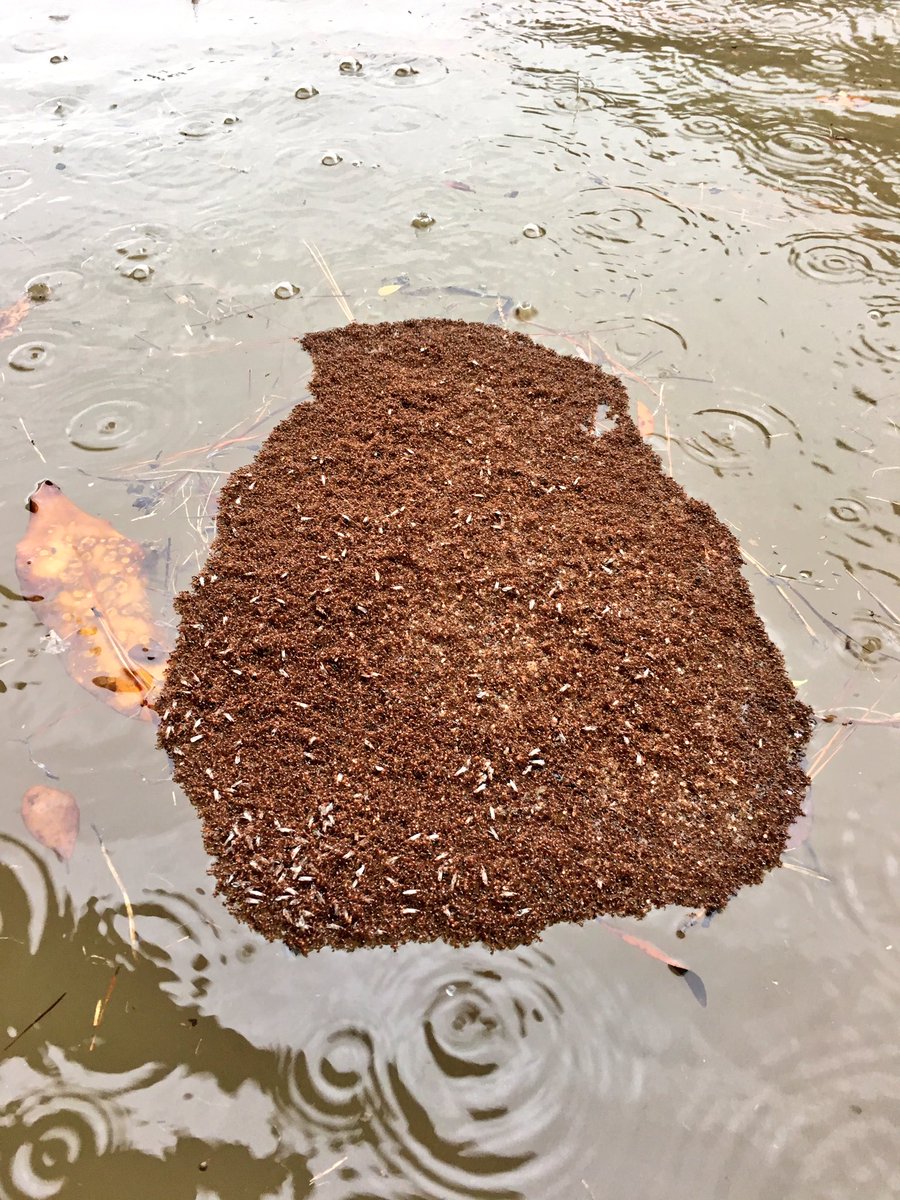
Fire ant floating colony in Houston floodwaters.
Photo by NBC DFW  @OmarVillafranca
Many in the pest control industry find themselves in the midst of the devastating floods hitting much of south and east Texas this week.  If so, it may be a good time to remind ourselves of some unique pest challenges associated with high water.

Flooding brings all sorts of wildlife into unusually close contact with people, but few critters are more dangerous than fire ants. When floods occur, fire ants exit the ground and float, instinctively linking their legs and forming a floating mat which is nearly impossible to sink. When they inevitably bump into a dry object like a tree, a boat or a person, the ant mass "explodes" with ants quickly exiting the mass and swarming the object.

Diving underwater, or splashing water on the ants, will not help.  The best option is soapy water, which is pretty good at killing the ants and helping drown a floating ant island.  According to the Texas A&M AgriLife Extension publication, "Flooding and Fire Ants:Protecting Yourself and Your Family", two tablespoons of soap in a gallon of water, sprayed on a floating mat is effective at drowning ants.  If any of you are engaged in water rescue this week, carrying a supply of soap along with a squirt bottle would be a good idea.

You might not have thought of it, but bed bugs can also become an issue after a public emergency like a tornado or flood.  When lots of people are brought together in an emergency shelter situation, the risk of bed bug encounters goes up.  The University of Minnesota has put together a nice publication on the subject. If you are in a community hosting an emergency shelter consider offering your services to inspect shelters and treat for bed bugs as necessary.  Don't forget the diatomaceous earth and silica aerogel dusts as a means of providing significant control for shelter bedding at minimal risk.

Lastly, after the storm is long gone be prepared for mosquitoes.  The primary mosquito species in the Texas Coastal Bend area are the salt marsh and pasture-land breeding mosquitoes. These are difficult to control at their breeding sites, short of aerial mosquito control campaigns.  But to some extent, these mosquitoes can be controlled in backyards with residual mosquito adulticides. If your company does residential pest control, but hasn't yet gotten into the adult mosquito control business, this may be a good time to start. One good way to educate your customers about the mosquito threat is the Mosquito Safari website.


Wednesday, August 16, 2017

A life saving opportunity

How would you like to save a life today? Through pest control? It's not as hard as you might think.

In the years since Bill Gates retired his position as CEO of MicroSoft Corporation, he and wife Melinda have devoted tremendous effort to battling malaria.  Malaria and the mosquitoes that transmit it is the single greatest killer of humans in the world, accounting for most of the 700,000+ mosquito-caused deaths annually.  But unlike many of the other major problems in the world, solutions to the malaria epidemic are available now.

The Gates Foundation is partnering with the NGO World Vision to give away 100,000 bed nets. These nets protect families from mosquitoes that carry deadly diseases, including malaria. Each one is treated with an insecticide that kills mosquitoes but has a low LD50 for humans.

Insecticide-treated bed nets have played an enormous role in the fight to end malaria. But distribution is a huge logistical challenge. This is where you can help.

If you're willing to take two minutes to learn more about the fight against malaria, and take a one question quiz, Mr. Gates has pledged to donate a bed net on your behalf to a family in Inhambane province--an area in the south African country of Mozambique where malaria is common.  You can do this at the Gates Notes Bed Net Giveaway website.

On a related note, my wife and I recently watched a film about the malaria problem in Mozambique called Mary and Martha, with Hillary Swank playing an American mom who loses a son to malaria.  It's a sad but compelling and uplifting film, well worth watching.  And it shows how a simple thing like a treated bed net can make a world of difference for families in another part of the world.

Wednesday, July 26, 2017

Asian tiger mosquito a focus of last week's training


Keith Haas demonstrates use of a handheld ULV applicator
for treating adult mosquitoes hiding in dense vegetation.
For which important urban insect pest did 70% of pest control companies get more calls last year? For which pest are 88% of pest management professionals (PMPs) confident that control options are better than they were five years ago?  For what pest do nearly 2/3 of companies have callback rates of 4% or less?

According to a 2017 report by MGK® Co., the repeated answer is "mosquitoes". It appears that pest control customers increasingly want to fight pesky mosquitoes in their backyards, and are willing to pay for it. 

Ultimately, this increased interest in mosquitoes is what brought 15 interested PMPs to the "Practical Mosquito Control" course last week at IPM Experience House. And, as students learned, the driving force for this demand may just be the tiny Asian tiger mosquito (ATM), Aedes albopictus, and its slightly less common cousin the yellow fever mosquito, Aedes aegypti.

A fast and opportunistic biter, tiger mosquitoes are relatively new pests, having arrived from Japan only about 30 years ago. When people complain that, "the mosquitoes are terrible this time of year", chances are they're talking about the day-flying ATM. But ironically, despite it's irritating bite, ATM is not currently a public health threat in most areas.

"The one good thing about ATM", said Scott Sawlis, county entomologist for Dallas County Health and Human Services, "is that it reminds people that they need to wear repellent, and thereby protect themselves from the more dangerous disease-carrying species."  In the Dallas area that would be Culex quinquefasciatus, the stealthier, nighttime-flying, southern house mosquito.  Even though folks don't tend to notice the house mosquito as much, it's the one to carry West Nile virus, our most serious mosquito-borne disease. 

Sawlis and fellow instructors (myself and Dr. Sonja Swiger with Texas A&M AgriLife, and Keith Haas, with Central Life Sciences), spent the day explaining to class attendees about the need for mosquito control, and some of the differences between the target species.  At the end of the day we got to practice what we learned in class by conducting an outdoor inspection and spending some workout time on microscopes looking at these tiniest of pests at a bug eye level. 

During our inspection we discovered mosquitoes breeding (naturally) just a few feet from where class took place.  Afterwards, students got to see fresh-caught mosquito eggs and watch mosquito larvae wriggle through murky breeding media.  Haas demonstrated the ability of a ULV generator to go through and around landscape vegetation, and Sawlis demonstrated proper use of a dipper when trying to determine whether mosquitoes might be breeding in a water source.

Although ATM may be one of the best things to happen to the pest control business in the past few years, it does have a darker side. The ATM is very difficult to control from city spray trucks and even from the air.  And it remains ready to transmit the viruses for Zika and dengue fever, should these diseases arrive in our area like Zika did last summer in Miami, FL and Brownsville, TX.  

One of the most effective tools, our class learned, for fighting tiger mosquitoes is the PMP. While county and city mosquito control staff must patrol streets with sprayers that treat city-blocks at a time (a technique that works well for the house mosquito), only the PMP walks backyards, identifies and treats ground-level breeding sites, and precisely targets sprays to ATM resting sites. This puts the pest control technician in an important role to reduce the most frequent mosquito bites, and to fight Zika and other Aedes-borne illnesses, should they arise here.

If you missed last week's class, and would like to learn more about control of ATM and its biting cousins, several regional training classes will be offered over the next few months.  Stay tuned here for more information.  


Monday, August 1, 2016

Zika the real deal for Texas PMP

More than 1600 cases of Zika have been reported in the U.S. so far, but until last week all of these had been in travelers--people who caught the virus somewhere else and brought it here.  As of last week, however, the picture is changing.  Last week four cases among people who had not traveled outside of their town were reported from north Miami in south Florida.  In an alarming development for Miamians this morning, 10 new locally acquired cases were reported today, likely signalling the first home grown epidemic of Zika infection in the U.S. All cases so far have been restricted to the north Miami neighborhood of Wynwood.

Jackie Thornton's Zika rash appeared about ten
days after he became infected.  It itched like
measles, he said.
Could this happen in Texas, or other states?  Absolutely.

When Jackie Thornton volunteered at his church to go on  a summer mission trip to the island of Dominica in the eastern Caribbean, the last thing on his mind was Zika virus.  Jackie is the owner of Alvin Pest Control in Alvin, TX, and long-time PMP.  "I was more worried about bed bugs," he admitted.

But when he arrived on Dominica (pronounced doe men NEE kah), someone mentioned that Zika and Chikungunya cases had been reported on the island.

Life in Dominica is a world away from a Texas suburban town like Alvin. Nighttime temperatures this time of year typically hover around 85 degrees F. Not so hot that air conditioning is a necessity, and besides few could afford such luxury.  The home where Jackie and his team slept was typical for the area.  Keeping cool at night depended on a nice breeze coming through one of the unscreened windows.

Knowing that Zika was around, and being an Associate Certified Entomologist, Jackie got interested in what was flying in his window.  Each night he would catch a few mosquitoes that looked more like house mosquitoes than the yellow fever mosquito, believed to be the primary Zika carrier.  Maybe things wouldn't be that bad after all.

But he got worried again about Zika about a week after arriving. "I developed a low grade headache that seemed to be behind my eyes," he said.  "It was worse when I woke up and lessened as the day progressed."  Eventually four others on his team also got sick, but not enough to keep any of them from working their shifts at vacation Bible school and helping repair homes damaged by Hurricane Erica.

After returning to Texas on July 24 the headaches persisted.  Two days later he woke up with joint pain in his hands, elbows, knees and feet, he said.  The next day, about a week and a half after the first headaches started, he went to the doctor for his joint pain.  On the way to the clinic, an itchy rash broke out "head to toe".  It was like having measles, he said.

Red itchy eyes was the only classic symptom of Zika that Jackie didn't have.  But he says he saw plenty of folks with red eyes while he was there.

Today, two and a half weeks after the first headache, he still itches, but the headache and joint pain is not as bad.  In typical PMP trouper fashion Jackie said he never felt like he had to be bedridden, but that it's been an "uncomfortable nuisance".  Indeed Jackie worked at his pest control company all last week, albeit while wearing long sleeves and lots of insect repellent to reduce the chance of starting his own Alvin, TX epidemic (an important community health precaution for any returning traveler, sick or not).

He now says, with a little bit of irony, "I may be the first U.S. PMP to come down with Zika."

I tell Jackie's story to remind us all that the risk from Zika virus is real... especially for anyone traveling to an area where Zika infections are active.

To see a map showing cities at highest risk for Zika this summer, click  http://www.cbsnews.com/news/zika-virus-mosquitoes-us-cities-most-at-risk/

To learn more about "Zika precautions for Women", see http://citybugs.tamu.edu/files/2016/06/Ento-053-Zika-Precautions-for-Women.pdf  and "What Texans Need to Know About Zika" see http://citybugs.tamu.edu/files/2016/06/ENTO-052-What-Texans-Need-to-Know-about-Zika.pdf


Tuesday, December 29, 2015

Bracing for Zika

Will Zika be the next mosquito-borne disease to capture headlines in 2016?  Or will it be the little disease that few (at least in the U.S.) have heard of?  That's the question being debated by public health officials this year.

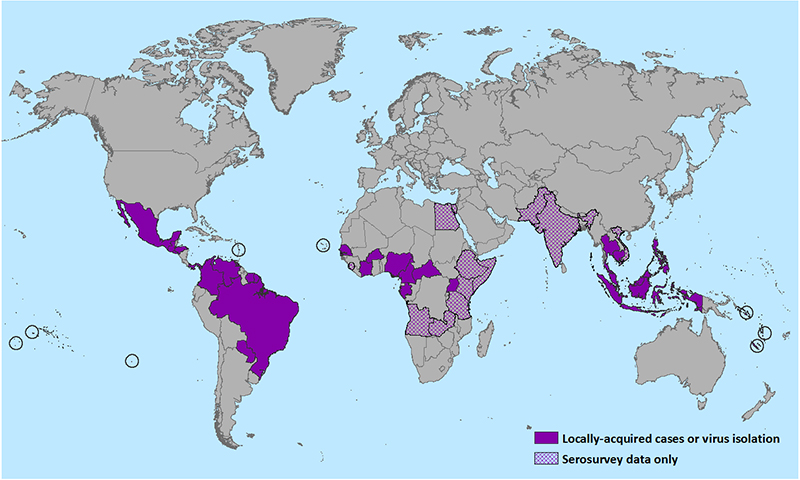
Current (2015) worldwide range of zika virus. Central and South
American countries were first reported with the disease in
2015 (U.S. Centers for Disease Control).
For many years it seemed like new things happened relatively slowly in public health in Texas. In the mid-1980s entomologists reported the Asian tiger mosquito in Texas for the first time--a daytime-flying mosquito from Japan that is not shy about biting humans. Then in 2002 the first cases of west Nile virus hit our state.  Carried by the southern house mosquito, WNV affected a couple of hundred people or less each year. This was the case until the blazing hot summer of 2012 when over 1800 cases were reported, including 83 deaths. Health departments throughout the state are still reeling, in some ways, from the impact.

Now health officials are bracing for another mosquito-borne disease caused by Zika virus (abbreviated ZIKV by epidemiologists).  A cousin of west Nile virus and dengue fever, ZIKV has been thought of as a less severe form of these flavivirus.  Most people who get ZIKV show no, or very mild symptoms.  Others exhibit a rash, conjunctivitis (inflammation of the eye), and flu-like symptoms.  Most people do not get as sick with ZIKV as with dengue fever or chikungunya, and recover relatively quickly.

For this reason, since its discovery in 1947 until 2007, it was not on the radar of many public health experts. But in 2007 ZIKV cases started to spread throughout Micronesia French Polynesia, and eventually Easter Island. There it was thought to possibly be the cause of a twenty-fold increase in cases of Guillain-Barre syndrome--an autoimmune disease of the central nervous system that can be highly disabling, at least temporarily.

In 2015 the disease made its appearance in Brazil and has since spread to at least nine other member states of the Pan-American Health Organization (PAHO/WHO), and prompting that organization this month to issue an alert to all of member public health agencies.

So here's where things get a little scary.  Since the arrival of ZIKV to Brazil, the virus has been detected in babies born with a condition known as microcephaly.  Microcephaly is a relatively rare condition where the brain fails to develop normally. It may result in miscarriage or in babies being born with under-sized brains.  There is no cure for the condition.  The PAHO/WHO alert noted that the number of diagnosed cases of microcephaly has increased to 2700, a 10-fold increase, in Brazil this year.  Health officials there are worried that there might be a connection between this unprecedented increase in microcephaly and the arrival of ZIKV.  And last month, unusual nervous system birth defects were also reported in Polynesian mothers who tested positive for flavivirus antibodies.

Public health officials guess that these cases may result when a pregnant woman who is bitten by an infected mosquito contracts the virus.  The virus then infects the developing fetus, resulting in this serious condition.

So far there is no hard proof of a connection between ZIKV and microcephaly or Guillain-Barre syndrome, but medical researchers are rushing to learn more about the virus and its possible effects on human health.  According to one expert, quoted in the New York Times, it could be that the risk of microcephaly is increased among people who have previously contracted dengue fever or chikungunya, neither of which diseases are common to Texas or the U.S. If this hypothesis proves correct, the risks to the unborn in this country would likely be negligible.

Currently, ZIKV is thought to be transmitted by the yellow fever mosquito, Aedes aegypti.  This mosquito, along with its close relative, Aedes albopictus, the Asian tiger mosquito, are both very common throughout Texas and the southern U.S.  Unlike west Nile virus, which is primarily a disease of birds, ZIKV is solely a disease of primates.  To be spread among people, it must be picked up from another infected human.

Dengue and chikungunya are similar, human-only, viruses that have not been quick to spread in Texas or other U.S. locations.  This may be the result of lower rates of mosquito biting in the U.S., perhaps due to our more indoor lifestyles, or more common use of repellents.  Some experts argue that for similar reasons ZIKV is likely to be slow to establish in the U.S.  Nevertheless, Brazil shows that given the right conditions, this virus is capable of establishing itself very rapidly, with 85,000 known infections in its first year of spread.

A few U.S. cases of ZIKV have been reported in 2015, but all from travelers who contracted the virus elsewhere.  Mexico has also seen a few cases this year.  There are still no known cases of ZIKV, however, contracted within the U.S.

So be prepared to hear more about the zika virus this year.  It may turn out to be a big event, or it may not.  Even if we didn't need more reasons to dislike biting mosquitoes, now we have one more reminder of the importance of residential mosquito control, and putting on the insect repellent when venturing outdoors.  

Monday, February 4, 2013

Pyrethroid label requirements tweaked again

Last year I posted a story about the new pyrethroid insecticide label requirements being sent to pesticide manufacturers by the U.S. Environmental Protection Agency. The requirements were designed in 2009 to reduce the risk of drift (wind carried contamination) and runoff (stormwater-carried contamination) of these commonly used insecticides. Since last spring, when pesticide manufacturers were officially informed of the new standards, the EPA has continued to dialog with both regulators and the pest control industry.  The results of this dialog are now out, and the final product is a big improvement, in my opinion.

The new EPA label requirements will
continue to allow pyrethroid applications
to eaves and protected sites around homes
where mosquitoes and other pests
may be resting.
At issue were applications needed to control certain overwintering insects like brown marmorated stink bug and kudzu bug, both of which aggregate on the sides and eaves of structures prior to entering the home or other building.  Under the 2009 rules, outdoor applications to the sides of structures were limited to crack and crevice applications or building foundations up to a height of three feet only.  In addition, all outdoor applications to impervious surfaces such as sidewalks, driveways, patios, porches and structural surfaces (such as windows, doors, and eaves) were to be limited to spot and crack-and-crevice applications, only.

After consultation with the National Pest Management Association (NPMA), the Association of Structural Pest Control Regulatory Officials (ASPCRO) and the State FIFRA Issues Research and Evaluation Group (an EPA advisory group also comprised of regulatory officials), the EPA agreed to make further changes to the original label requirements to allow for better control of overwintering insects.

While restrictions on insecticide applications to impervious surfaces and prior to expected rainfall have not changed, there are some big changes on applications to structures, as published in a January 10 letter to pesticide manufacturers.  The three changes are summarized as follows:

  • Now applications of pyrethroids may be made to the exterior of buildings where the treated surfaces are underneath eaves, soffits, windows or doors that are protected by coverings, overhangs, awnings or other structures that protect the residues from rainfall;
  • application bands up to one inch-wide may be applied to cracks or other potential pest entry points;
  • and applications may be made using a coarse, low-pressure spray to portions of surfaces that are directly above bare soil, lawn, mulch or other vegetation.
The purpose of these requirements is to prevent pyrethroid pesticides from entering storm water and getting into streams, something that is most likely when pyrethroid sprays land on impervious surfaces like asphalt or concrete.

In addition to giving back to PMPs the ability to use pyrethroids against overwintering pests these new regulations should help applicators control nuisance and public health mosquitoes that frequently rest on the sides of buildings and around doorways.  This was, in my view, a potentially serious public health issue with the 2009 rules.

So what will be the big change to the way your company applies pyrethroids after the dust is all settled? The new labels will prohibit power spraying driveways and over sidewalks, garage doors and any vertical building surfaces over pavement. Assuming the manufacturers follow these guidelines closely, labels should allow low-pressure sprays to the sides of structures over vegetation or soil and in sites protected from the rain, in addition to cracks and crevices.

Congratulations to the EPA and to those regulators and NPMA experts who took the time to look for ways to keep the pyrethroid label requirements reasonable while continuing to protect the environment. This is one of those examples of how the system sometimes works in everyone's favor--except, in this case, the pests'. 

Thursday, August 23, 2012

What can schools do about mosquito control?

In case you haven't heard, mosquitoes have been big news in Texas lately. This summer has turned into the worst summer on record for West Nile virus (WNV) in Texas, and both Dallas and Houston have resorted to aerial attacks to attempt to stem the tide of the mosquito and the virus.

Now with a new school year starting up, many school districts are asking themselves, "What should we be doing?" Parents will be concerned about their children waiting at bus stops and participating in band and athletics practice.  And let's not forget about Friday Night Lights, and weekly football games.  What responsibility do schools have to take part in community wide mosquito control?  And if you work for a school district, what will you tell parents when they ask what the district is doing to keep their kids safe from West Nile virus?

Source Reduction
Perhaps the most important single thing a school district can do is make sure that school grounds are not contributing to local mosquito problems. It's especially important to check water catchment basins, storm drains, low areas, and equipment storage yards, athletic and playground equipment for places where water might be caught and held. If you do pest control in a school district, expand your vision at this time of year to look for and report potential mosquito breeding sites.

If a suspected breeding site is found, report it to your local health department, or if possible, drain the water or treat with it. Effective mosquito treatments include Bacillus thuringiensis (Bt) dunks or methoprene (Altosid®) granules or briquets.  Both of these are Green category insecticides.

Treating Mosquito Resting Sites 
Mosquitoes are primarily active in the evening and morning.  During the day, adult mosquitoes typically rest in vegetation or other shaded sites. We can use this information to reduce mosquito numbers. Treatment of mosquito resting sites can dramatically reduce bites and biting rates in the immediate area of treatment.

If you know of areas of vegetation, or shaded doorways where mosquitoes are a problem, consider treating such sites with a residual pyrethroid spray. Pyrethroid insecticides like deltamethrin, cyfluthrin, bifenthrin, and lambda-cyhalothrin (Yellow category) can provide up to six weeks control on vegetation or building surfaces. These products can be applied via hand-held pump sprayer, backpack mist blower, or power sprayer to doorways and trees, shrubs and ornamental grass around buildings and entryways.

Such sprays are probably not necessary on most campuses, but in sites with heavy shade and vegetation, and populations of biting mosquitoes, such treatments may be warranted.  If you choose to treat sites like this, remember to post the school 48 hours in advance, and keep students and staff out of treated areas until sprays have thoroughly dried.

Low Volume Treatments
One of the five planes used to apply mosquito
sprays over Dallas County this month. (Photo
courtesy of Dallas Morning News and Tom
Fox/Staff Photographer)
When most people think about mosquito control they think about trucks or aircraft applying a fog or mist. The treatments used by such government agencies are called ultra-low volume (ULV) sprays.  The very tiny particle sizes used in such applications allow better penetration into dense foliage, and generally mean quick dispersal and short life of spray residues.

Most school districts will not engage in ULV sprays, though some cities or mosquito districts may offer the district an option to be included in community-wide spray actions. If ULV insecticides are to be used for campuses or sporting venues, remember to follow posting and notification requirements. Yellow category justifications must generally be filed, because most ULV treatments use Yellow category products like resmethrin or permethrin.  Synergized pyrethrin applications may be considered Green, unless the synergizing additive in the spray concentrate (generally piperonil butoxide) is greater than 5% .

The effect on mosquitoes from ULV-applied sprays is generally short-lived (few hours to a day), so they should be used only on special occasions, such as an hour or more before a sporting event. Wind and weather also have an important influence on the effectiveness of ULV sprays, so be sure to measure and record wind speed prior to application and follow label restrictions carefully.

If your campus has been sprayed as part of a community-wide aerial spray campaign, no special precautions should be necessary.  However some districts have been making a point to let parents know that school play equipment has been washed after spraying.

Education and Awareness
Ironically for schools, one of the most overlooked components of an IPM program is education. Mosquito season provides an excellent opportunity to get mosquito control information out to the community, as well as raise awareness of your district's IPM program.

One of the most important messages that a school can send is the importance of wearing insect repellent when working or playing outdoors. Consider notifying parents and students advising them to wear a good repellent to school, or at evening sporting events.

Many districts have had questions about whether they can allow students to use repellents on school grounds. Personal use of repellents is not prohibited or addressed by state school IPM regulations. Therefore it is up to each district to decide whether students and staff can bring and use repellents at school.  Options include allowing students to bring repellents to a school nurse, and having the nurse apply if needed. Another option might be to allow only cream or non-spray repellent formulations, especially for band and athletic departments in middle and high schools.  The time to decide on the appropriate policy, however, is now, before students return to campus.  For more information on insect repellents, see the excellent repellent guide put out by the National Pesticide Information Center.

As a public service, consider assisting the Texas Department of State Health Services and other local health authorities get the message out about mosquito control.  There are many useful educational materials and websites (see below) that parents should be aware of. School districts can play a useful role in getting mosquito awareness information out to our communities. Consider linking this information in your school district’s website.

Some quick facts about mosquitoes and West Nile virus: 

  • The southern house mosquito, Culex quinquefasciatus, is the primary carrier of WNV in most of Texas (different species carry the virus in other parts of the country). This mosquito is a container breeder.  It prefers to breed in small containers or puddles of standing water. 
  • Water must stand for 10-14 days to be a problem for mosquito breeding.  It doesn't have to be a lot of water, but this is approximately how long it takes for mosquitoes to complete their life cycle at 85-90 degrees F.  
  • Remember stagnant, polluted (stinky) water is the water that Southern house mosquitoes love.  Water where fish are present, such as a pond or permanent stream is not usually a big source of mosquitoes. 
  • Not all people are equally attractive to mosquitoes. Body chemistry differs from person to person and some of us smell more attractive to mosquitoes than others.  Don't assume that because you aren't noticing bites that mosquitoes are not active.
  • Remember the 4 D’s 
    •  DUSK/DAWN- Stay indoors at Dusk/Dawn. This is the time of day that mosquitoes are most active. 
    • DEET-Use insect repellents that contain Deet when going outside, especially at times closer to dawn or dusk when mosquitoes are most active. 
    • DRAIN - Remove all areas of standing water. Examples are pet dishes, birdbaths, and water dishes under potted plants. Repair faulty French drains. Remove debris from rain gutters. Mosquitoes will breed in this debris since it is normally damp under the debris. Remove all piles of dead leaf material from under trees and shrubs. This also is a breeding site. 
    •  DRESS- Avoid being bitten by mosquitoes by wearing light colored long sleeved shirts and long pants when going outside. 
Additional Resources
Thanks to Janet Hurley and the Texas School IPM program in assembling much of the information for this post.

Tuesday, July 27, 2010

What good are mosquitoes?


An article in the July 21 online edition of Nature magazine posed researchers the question, "Would it be a good thing if all mosquitoes were eradicated from the earth?"  I've often been posed a similar question in slightly different form, namely, "What good are mosquitoes (or ticks, or chiggers)?"

Aside from the purely speculative question that Nature asked (we couldn't get rid of all the mosquitoes in the world in a thousand years if we tried), perhaps a more realistic question would be, "If we could get rid of even one mosquito species, should we?"

Humans have been sadly effective in causing the extinction of species from the dodo bird to innumerable beetles and butterflies and other creatures.  Most of the time it is accidental, or through neglect.  Habitat destruction is probably the number one cause of species elimination.

Now, through the power of biotechnology it may be possible to cause the deliberate extinction of certain species.  So, if we had the power, should we do it?  There are powerful arguments on both sides.  Some scientists have argued that if we could destroy all the species of Anopheles and Aedes mosquitoes, for example, the world would be a better place and millions of lives would be saved. 

As the writer in Nature points out, there are many species which appear to be pests to us humans, but which hold together important strands in the web of life.  We humans have never been very good at predicting what would happen when you pull one of those threads.  Eliminating all species of no-see-um flies (a family known for its painful bite and transmission of certain viruses, protozoa and filarial worms), for example, would include elimination of a species of these flies that pollinate the cacao tree. As the Nature article threateningly proposes, "Imagine a world without chocolate!"


I am still unsure that we should deliberately cause the extinction of all mosquitoes. And I suspect I'm not alone in feeling this way about insects.  I wonder what PMPs would say if someone come up with a practical proposal to cause the extinction of German cockroaches?  I'll bet there are more cockroach lovers out there than anyone realizes.

Thursday, July 1, 2010

The most common mosquito-borne encephalitis

Asian tiger mosquito, Aedes albopictus, feeding on human
I think that one of the most awesome things our industry does is protect people from disease that can literally destroy a life.  It is also a weighty responsibility when we stand between a customer and the threat of disease.  Numerous pests that are controlled by our industry have the potential for causing disease in humans.  Consider a few examples:
  • Rodents are implicated in 55 human diseases.  In Texas, murine typhus is on the increase with nearly 3/4 of all U.S. cases in the southern part of our state.  
  • Over 100 pathogens have been associated with house flies, including Campylobacter and the deadly E. coli O157:H7, and possiby community-acquired MRSA.
  • Although it's been hard to connect cockroaches with outbreaks of human disease, the German cockroach has been shown to be a carrier of at least 60 species of bacteria, fungi, molds, helminths, protozoans and viruses.  
  • Cockroaches have also been implicated in causing asthma, especially in pre-school aged children.  In older people, definitive evidence shows that cockroach allergens exacerbate asthma.
  • Mosquitoes may be the worst, with their frequent association with virus transmission, heartworm (in dogs) and other disease. 
The Centers for Disease Control and Prevention recently published the annual report on West Nile virus for 2009.  Since its introduction into the United States in 1999, West Nile virus (WNV) has become the leading cause of arthropod-borne viral encephalitis in the country. The good news is that the number of WNV cases continued to decline this year, with 38 states (and the District of Columbia) reporting 720 cases (down from 1356 cases last year, and a high of 4156 cases in 2002). The bad news is that Texas continues to lead the country (with nearly a quarter of all cases) in reported neuro-invasive cases of WNV.  The term "neuroinvasive" refers to severe cases of the disease that affect a person’s nervous system. These include encephalitis (an inflammation of the brain), meningitis (an inflammation of the membrane around the brain and the spinal cord) and acute flaccid paralysis (an inflammation of the spinal cord that can cause a sudden onset of weakness in the limbs and/or breathing muscles).  None of this is something you want to get. 

I've discussed WNV before in this blog, partly because we have had a number of cases in my Dallas community, but also because WNV is typical of many mosquito borne diseases which pop up periodically in the U.S.  I am convinced that our industry can and should be doing more for the public with regard to mosquito control.  Although most mosquito control is (appropriately) conducted by county and city health departments or mosquito control districts, PMPs can play an important role in the fight against mosquito-borne disease.  Here some of my thoughts on how you can help.
  • Train your technicians to be on the lookout for mosquito breeding sites when conducting inspections of residential accounts.  No one thinks their backyard is the one breeding mosquitoes.  It's always the next-door neighbor or the creek down the street.  In one study done by the Dallas County health department a few years ago, 25% of the folks who called the health department to complain about mosquitoes had mosquitoes breeding in their own backyard.  I know from experience that it's easy to forget to turn over the wheelbarrow or put away the kids' toys before rain or irrigation water can sit and breed mosquitoes.  Having an extra set of trained eyes looking over the yard every month can make a significant difference.
  • Educate your customers about mosquito control.  How to recognize and report problems, explaining the importance of repellents, and reports on the local mosquito situation in your community(maybe through a newsletter, your website, or monthly bill inserts) can be a much-appreciated service and increase your value to your customer.  A lot of people forget about mosquitoes after the spring tides of floodwater mosquitoes ebb, but now as the summer heats up the risk of mosquito-borne disease actually increases.
  • Consider including mosquito control among your summertime pest control services.  In addition to backyard fogging prior to outdoor events, residual sprays applied to mosquito resting sites (via sprayer or backpack ULV blower) can be very effective.  Of course larvaciding in some locations can be helpful also.
  • Refer your customers to the Mosquito Safari website for more information about mosquito control and how to find mosquito breeding sites in their own backyards.

Friday, May 21, 2010

Mosquito repellent help

Pest management professionals are exposed to all sorts of health risks, including many of the same pests that afflict their customers. Mosquitoes and ticks are among the worst offenders.  Even if you're not in one of the parts of the state where you risk being eaten alive, we all can potentially be affected by West Nile virus and other mosquito- and tick-borne diseases.

A good mosquito repellent is an essential tool for the PMP. Mosquito repellents are without question one of the marvels of technology. Gone are the days of slathering smelly bear grease on your body to ward off the hungry hoardes. Using modern technology, a quick spray or small dab of cream and you can be protected effectively from the bites of mosquitoes, ticks and biting flies for hours.

It's both a blessing and a curse that there are literally hundreds of repellent products on the market. Choosing the best repellent can be confusing. For many years the Centers for Disease Control (CDC) and most entomologists recommended DEET as the most reliable repellent for most pests. I still recommend DEET for most professionals heading out for a day's work, because one application of the right product can provide day-long protection.  But some of us don't care for the smell of many DEET formulations, and others report sensitivity to DEET.  Fortunately, in the past few years researchers have found acceptable alternatives.  Many of these products provide equal protection, although DEET appears to still be tops for length of protection.

The U.S. Environmental Protection Agency (EPA) and the National Pesticide Information Center both recently posted a handy online tool to help you choose a repellent. The core of the calculator is a database that cross-references registered repellents against their expected hourly protection times against ticks and mosquitoes. Simply enter the pest you are concerned about, how long you need protection for, and (if you have one in mind) the active ingredient you are interested in. It then produces a download-able list of commercial repellents that meet your needs.

The calculator is relatively simple and, unfortunately, does not cover biting flies other than mosquitoes. I was also a little disappointed that it doesn’t give a reliability rating or provide references to the research on which the data is based (OK, I’m a skeptical scientist…you may not feel the need for this feature). What you will find if you use the calculator is that there are a number of acceptable alternatives to DEET that you may not be aware of–especially if you don’t need 10 hours of protection.

The EPA calculator can be found at http://cfpub.epa.gov/oppref/insect/
The NPIC calculator can be found at http://npic.orst.edu/repel

Also, for lots more information about mosquitoes and mosquito control, don’t forget the Mosquito Safari website. This site is has lots of information about where to find and how to treat mosquitoes.

So next time you head out for accounts with mosquito activity, don’t forget the repellent. And be thankful for the many alternatives to bear grease.

Wednesday, October 8, 2008

Go on a mosquito safari with new website

explore a virtual backyard by clicking on hidden hot-spots that lead to information about mosquitoesWhen it comes to mosquitoes disrupting the backyard barbecue, most of us want to point fingers. We want to blame the city for not spraying, or our neighbors for creating a nuisance. But a significant part of the time, we are our own worst enemies.

That's the subtle message of a new website I've just completed. But no one's pointing fingers, just pointing out the many place that mosquitoes breed and hide out in the average backyard.

The Mosquito Safari website will take you on a virtual tour of your backyard, encouraging you to see your property from the tiny perspective of a mosquito. Did you know that an old tire makes the perfect mosquito home? That garbage cans and garbage lids are one of the most common breeding sites for mosquitoes? What about bird feeders and bird houses in areas where West Nile virus is common--does attracting birds to your backyard make the risk worse?

These and many other questions will be answered as you take the time to explore this site. Topics covered include mosquito biology and life cycles, risks of mosquitoes to humans and pets, how to identify the most common mosquito pests, and the steps you can take to reduce mosquito bites in your own backyard.

If you visit, be sure to turn on the sound, as much of the site is narrated.

For pest management professionals, the site might be a good way to reinforce the messages your technicians are giving your customers about the things they can do to reduce their risks. New technicians? Mosquito Safari can provide at least a half hour of training time for trainees.

Of course a site like this is not developed by just one person. I want to acknowledge the Dallas County Health Department, and former entomologist there, Scott Sawlis, for invaluable help and guidance in design of the site. Dr. Mark Johnsen, mosquito expert with Texas AgriLife Extension in College Station, was also very helpful providing advice and support. One of my desires was to make the site visually interesting and graphical in all aspects, and for this I thank the number of people willing to contribute images of mosquitoes and mosquito-related topics.

Please check it out and let me know what you think.

The mortgage crisis and West Nile virus

mosquitoes like hot tubs tooJust when you think the news couldn't look any more bleak, we learn that home foreclosures are sparking a rise in cases of West Nile virus. Huh? Yes, the CDC's online publication Emerging Infectious Diseases will be publishing an article in November that provides convincing documentation that an increase in home foreclosures (and accompanying abandoned swimming pools) in Kern County, California has resulted in an increase in Culex mosquito breeding in suburban neighborhoods.

Kern County has been especially hard hit by the mortgage crisis, with the number of mortgage defaults increasing 300% from 2006 to 2007. During the same time the number of human West Nile virus cases there increased by 276%. Aerial surveys confirm the high number of abandoned or neglected pools, jacuzzis and hot tubs, as evidenced by their green algae-rich color. It's bad enough to live in a neighborhood of foreclosed homes, but it's worse when those backyard pools turn into mosquito factories.

Several species of mosquitoes, including the principle vectors of West Nile virus, thrive in fish-free water rich in algae and bacteria. In California, both Culex quinquefasciatus and Culex tarsalis larvae have been collected from pools. The situation is similar to what was seen after hurricane Katrina in New Orleans, with thousands of scummy pools in abandoned backyards after the storm.

The situation does not appear to be limited to California. According to an online article in Newsday.com even Senator Hillary Clinton has become aware of the issue. She recently asked the CDC to look into the possibility that the foreclosure crisis and vacant homes on Long Island, NY are leaving pools of stagnant water where the virus-carrying mosquitoes breed.

So what's all this got to do with the pest control industry? If your company does residential pest control, you should alert your technicians to the potential health threats posed by abandoned pools. Technicians should report abandoned or neglected pools to customer or the local health department. Health departments should be interested in contacting the owners of such sites as a potential public health nuisance.

If a dirty pool or jacuzzi belongs to a customer, and you have permission, temporary control of mosquitoes is possible by treating pools with Bacillus thuringiensis or methoprene-containing products labeled for mosquito control.

If your company is located in one of the hurricane zones in Texas, noting and reporting potential mosquito breeding sites is even more critical. And if you've been looking for a way to help out in your community, providing chemical or biological control of mosquitoes in backyards might be one of the most important things you could contribute to the re-building effort. If your company is doing something along these lines, let me know. I'd be honored to spread the word about your efforts.

Wednesday, August 6, 2008

The human face of West Nile virus

Dr. Don Read leads the Dallas support group for West Nile virus survivors.Dallas, TX. We hear of rare illnesses and diseases nearly every day in the newspaper or on television. After a while, I think most of us become a little jaded, and tend to forget or ignore threats that have not affected us personally. One of these relatively obscure diseases is a mosquito-borne illness called West Nile virus. Since 2002 Dallas county has averaged 45 clinical cases and two deaths a year.

These numbers may not seem like much...on paper. But these are real people who contract mosquito-borne disease every year. They include our neighbors. Friends. Parents. Teachers. The tiny bite of a Culex mosquito can, if infrequently, lead to a life-changing illness. Many of us reading this post may have already been infected by this virus. Only 20% of infected persons show any signs of the disease, and most of those will have little more than the sniffles. One in 150 infected persons, however, will contract the more serious central nervous system form of the disease.

Despite my awareness of West Nile virus and the clinical implications of the disease, until I met actual victims I don't think I really appreciated the power of this virus to potentially affect my life or the lives of loved ones.

Dr. Don Read and his wife Roberta lead a support group for victims of West Nile virus in the Dallas area. There are only a handful of such groups in the country, but they can be a godsend for people who have suffered from one of the more serious cases of infection. Last week I had the chance to attend one of their support group meetings at Medical City Dallas Hospital. It was a sobering experience to listen as people shared their encounters with the disease.

This month's meeting was covered by Reporter Melissa Maynarich from Oklahoma City's CBS Channel 9 News. She and her photographer posted a video story of some of the folks at this meeting. If you are interested in the human side of the West Nile virus story, check it out at http://www.news9.com/Global/story.asp?s=8764354

It might make you look at mosquitoes a little differently. I know I'm reaching for the repellent more these days. If you know of someone who has suffered from West Nile virus, or just to learn more about the disease and the support group in Dallas, check out the Dallas County Health Department's website on West Nile virus.

Tuesday, August 5, 2008

Demands for mosquito control likely to rise

It seems Hurricane Dolly brought with her more than rain. Following the record rains and flooding mosquitoes have also arrived by the semi-truck load.

Mosquito pressure is often measures in terms of numbers of landing rate per minute. A volunteer will expose a leg and another person will count the number of mosquitoes that alight on the exposed skin for one minute. A recent Harlingen survey put the average per minute landing rate at 120, with a high in one location of 384 mosquitoes per minute! Aedes vexans floodwater mosquitoes are painful biters That's a lot of mosquitoes.

A regional spraying effort started this week in south Texas. Airplanes will be applying the insecticide Dibrom to most parts of the lower Rio Grande valley to suppress numbers of especially floodwater mosquitoes that are the first species to come out after a flooding event. For more information about the spray program, see the August 2 article in the Rio Grande Guardian.

The ironic thing about these efforts is that floodwater mosquitoes pose a relatively low threat for arthropod-carried viruses, such as encephalitis and West Nile virus. The mosquitoes that carry these disease pathogens typically come out once waters begin to subside and leave numerous pools of stagnant, standing water. Not to say that spray efforts will not be without effect. Population numbers of the levels described for Harlingen would leave anyone miserable and crying for relief.

Once the huge numbers subside, and the spray planes return to their bases, the pest control industry will have an important role to play in helping reduce the risk of bites and disease. Experienced PMPs can point out to people areas where disease-carrying mosquitoes breed in their own backyards. In addition, the use of residual insecticides applied carefully to mosquito resting places in backyards and surrounding trees can significantly lower mosquito biting rates.

In one study conducted in Kentucky, and reported in the May, 2005 and October, 2006 issues of PCT magazine, backpack mistblower sprayers provided up to 6 weeks suppression of mosquitoes in backyards. Such treatments provide a valuable service to residential customers and can even reduce the risk of mosquito-borne disease by reducing populations of Culex mosquitoes, the primary vector of WNV and the various encephalitis diseases.

With today's landing of tropical storm Edouard, mosquito control will be an important issue for the pest control industry in Texas for the next two months. If you own a business in one of the areas affected by storms this summer, you owe it to yourself and your customers to read the research updates in PCT magazine, linked above.